
Blood, guts and cheap cuts: We need an alternative to eating animals – and ‘ethical meat’ isn’t the answer
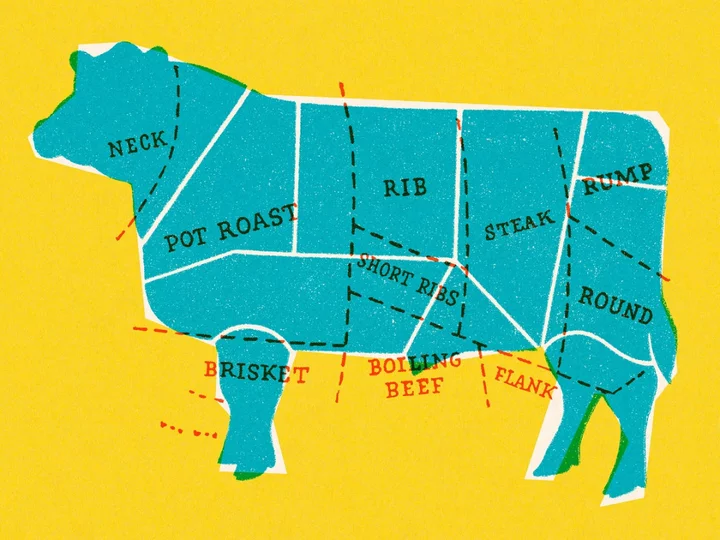
Amber Husain was cooking dinner for a friend when she suddenly realised the meat she was preparing was a corpse. She looked at the chicken in front of her and was overcome with a visceral sense of disgust. Instead of food, she saw “a carcass – plucked, beheaded, and fleshy”. Husain was 26 when she had this epiphany, and it served as a wake-up call not just for her stomach but her mind, too – as her personal tastes shifted away from meat products, her political outlook on the meat industry and food production more broadly also altered and expanded. Five years later, that moment of revulsion forms the opening of her new book, Meat Love, in which she scrutinises the idea of “ethical” meat consumption, and dares to ask how the contemporary middle classes have come to criticise “the worst violence against animals” while still happily feeding on their flesh. Why, for example, has well-heeled, middle-class London gone nuts for slurping bone marrow from the shin bones of baby cows? Why is offal on so many trendy menus? How has contemporary culture at large come to accept that factory farms are monstrous, but that if animals are cared for, cherished and loved while alive, we should feel better about killing them for our carnivorous pleasures? “For ages, I was one of those carnivores who felt mildly bad about eating meat but just turned that into this inane, self-consciously sadistic part of the pleasure of it all,” Husein tells me. “The more my diet started to revolve around stuff that wasn’t meat, the weirder meat started to feel. Interestingly, once my stomach had been radicalised, I found I had a much greater intellectual openness to thinking about the politics of meat.” Having freed herself from the conflict of eating meat but also feeling bad about it, she found she was able to go beyond those questions of morality – which she suggests can be “stifling” – and think politically. “Now that I have no desire to eat animals, there’s nothing to stop me reckoning with what it means that the meat industry [consists of] an underclass of both humans and animals who are exploited and – in the animals’ case – killed for pleasure and profit.” This is the essential crux of Husain’s argument, and it’s something often lacking in discussions around the “ethics” of meat consumption. For Husain, the question is not, “how can humans eat meat responsibly?” but “how are certain lives devalued to an extent that their suffering can be written off, in order to ‘make a killing’?” What she’s saying, in other words, is that whether the meat on the table has come from a factory farm or an organic farm, or whether you’re tucking in at Burger King or the River Cafe, the path to the plate is still paved with violence. And, while current cultural trends may claim it is better to love and respect an animal before killing and consuming it, perhaps what this cultivates is the ability to embrace exploitation “in a spirit of virtuous indulgence”. What does it really mean, for all living beings, if love is imagined as compatible with killing? “To slide your buttery hand between the flesh and skin of a thing that, if only for a moment, you have re-learnt to perceive as a corpse, is to give an invigorating massage to your sense of political possibility,” Husain writes in Meat Love. By the slim book’s end, her invigorated “sense of political possibility” has led to “a ravenous hunger – a desire for a different culture, a different society”; a new world “in which no one, neither animal, immigrant, worker, woman, or peasant, was considered a thing to be owned, controlled, killed, or left to die”. For many, the leap from a chicken breast on a plate to the exploitation of oppressed people around the globe might seem like a vast one. Yet, it certainly seems clear that there has been a marked shift in the way meat is conceived and consumed – among the middle classes, at least. Since the turn of the millennium, foodie figures like Hugh Fearnley-Whittingstall have been promoting “seasonal, ethically produced food” as part of a broader commitment to caring for the environment. At the same time, a distinctly carnivorous spirit has taken hold – one that professes to be an “honest”, “grounded” and “down to earth” ethos. “Good food, good eating, is all about blood and organs, cruelty and decay,” Anthony Bourdain wrote at the start of the 1999 New Yorker article that would, eventually, catapult him into global foodie fame. I find it easy to laugh at Hugh Fearnley-Whittingstall and people like that, but I’m not totally convinced that they’re really the bad guys Lewis Bassett Then there’s Fergus Henderson and St John – the illustrious London restaurant, born in 1994 on the premises of a former bacon smokehouse, which popularised “nose to tail” dining. This offal-centric “no waste” approach is neatly summed up in Henderson’s oft-quoted phrase: “If you’re going to kill the animal, it seems only polite to use the whole thing.” Traditionally “cheap cuts” are “elevated” from a source of sustenance for the working classes, to a source of virtue for the urban bourgeois. According to its own cookbook, St John dishes combine “high sophistication with peasant roughness” – that winning aesthetic formula that also sees middle-class urbanites flocking to farmers’ markets and chugging natural wine. In a sharp and searing piece for food and culture newsletter Vittles, writer Sheena Patel dubs this “Rich Person Peasantcore”, asking: “Why are these influencers pretending that they themselves till the land and eat like 17th-century French peasants when in fact their chopping boards cost more than most people’s rent?” In the face of swathes of small plates adorned with offal, and slices of ham served for upwards of £20, it seems like a pertinent question not just for influencers, but also for today’s trendiest restaurateurs and diners. Lewis Bassett is a chef and the host of The Full English podcast, which, over its two seasons, has dived into everything from the birth of “modern European” cuisine to high food prices, factory farms, and why Britain is in love with Greggs. “It’s interesting the way we create these fantastical worlds for us to eat within,” he says. “It is clearly a fantasy to imagine that you can have the rural experience of a peasant in France or Italy, in modern-day Britain.” Yet, he also says that this trend is far from new. The current “rustic” style – typified by “nose to tail eating” – is, he suggests, “intimately tied with what you could call a culinary and broader cultural movement that appears in the wake of countercultural movements in the Sixties, and eventually finds its way into food, especially as some of those countercultural people get a bit older and a bit more affluence”. Essentially, “it’s the same thing that manifested in places like Habitat,” he says, of the homewares and furnishings brand founded in 1964 by Terence Conran. Both design and dining were transformed, offering experiences to the middle classes that were both refined and casual at the same time. Alongside that cultural shift, and “that fashion for pared-down forms of eating out”, Bassett notes the arrival of a broader awareness of environmental and animal welfare concerns. “It’s obviously easy to ridicule these middle-class forms of culture,” he says, “but these concerns are ones I certainly share and I think should be considerations for everyone. I find it easy to laugh at Hugh Fearnley-Whittingstall and people like that, but I’m not totally convinced that they’re really the bad guys.” So is there a danger that legitimate backlash to the “thrifty rural”, “nose to tail” trend – and bourgeois “peasantcore” more broadly – could spill over into an attack on all food industry attempts at sustainability? “I think people don’t want stuffy fine dining experiences,” Bassett says, “but at the same time, having the kind of pared-down, rustic, ‘peasant food’ – like, having ham served to you at St John costs you 20 quid – maybe people are slightly sick of that.” He quickly adds, though, that he is “not saying it can come any cheaper than 20 quid, because when you spend a lot of time and effort rearing animals properly, and paying chefs properly, and paying rents in your restaurants, that racks up”. It seems there is a tension, then, between practical and immediate ethical matters – such as paying food industry staff liveable wages or reducing food waste – and broader questions about what kind of society we wish to live in or create. Is the question of “ethical” meat consumption, as Husain suggested, “beyond morality” – a question of politics only? Or is it still, at heart, a moral dilemma, based on people’s personal sense of “right” and “wrong”? Summing up Husain’s attitude towards animals in Meat Love, Bassett suggests “she’s saying that, if you love them so much, why are you killing them? I suppose where Amber Husain and I would slightly disagree is that I’m not convinced that killing an animal is inherently wrong.” Away from the carnal appreciation and “peasantcore” of contemporary restaurant culture, meat-eating often seems to be conceived as either a “guilty pleasure” or a “grim necessity”. In all these cases, however, there appears to be an overriding sense that there is “no alternative” to a meat-eating status quo. The late cultural critic Mark Fisher famously used similar terms to define “capitalist realism”, meaning that capitalism is the only viable economic system, and thus there can be no imaginable alternative. Is it possible we’re also stuck in a kind of “carnivorous realism”? If so, it might be because the two are so interlinked. As Husain puts it, “meat is the inevitable outcome of an economic system that relies on cheap labour and cheap life. But that doesn’t mean meat is a necessity, it means a new economic order is a necessity.” Perhaps taking the leap from a vegetarian diet to full-scale social and economic revolution still seems unthinkable to many. But, in nasty, brutish and austere times, it has also perhaps never been more necessary to seriously consider who can eat, and who is made meat. “I think we need an avalanche of political will from within the food justice, land justice, climate justice and labour movements to radically transform society,” Husain says. With that as the goal, she believes it isn’t helpful “for us to be clinging to the idea of meat as a pleasure”: “If we can’t imagine something other than animal flesh to eat for dinner we might struggle to imagine an entirely different society.” ‘Meat Love: An Ideology of the Flesh’ by Amber Husain is out now Read More Between Brexit and Covid, London’s food scene has become a dog’s dinner – can it be saved? It’s time for booze bottles to have health warning labels Should I give up Diet Coke? With aspartame under suspicion, an addict speaks Food portion sizes on packaging are ‘unrealistic and confusing’, says Which? In Horto: Hearty, outdoorsy fare in a secret London Bridge garden Zero-fuss cooking: BBQ pork ribs and zingy Asian slaw
2023-07-30 13:58

The Best iPad Keyboards for 2023
Your iPad can do so much—streaming shows and movies, playing music, serving as an ebook
2023-08-17 20:21
From HSBC to Citi, Global Banks Expand Maternity Benefits to Retain Women in India
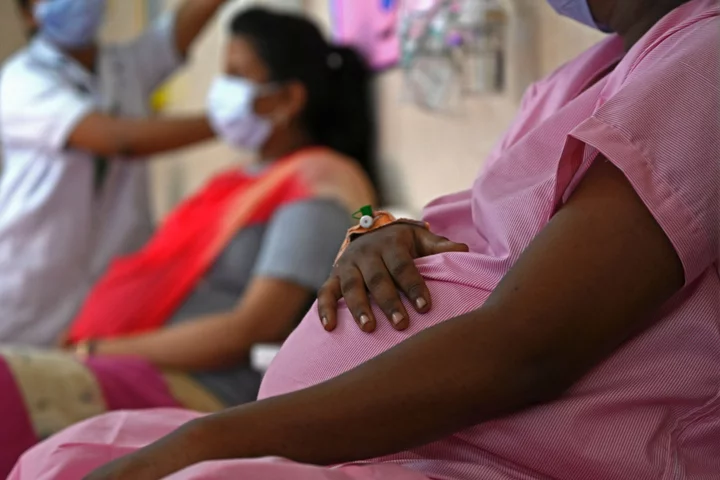
HSBC pays for bankers’ nannies in India for up to six years. Morgan Stanley allows pregnant staff to
2023-09-18 09:29
Fatima Whitbread supporting new fostering campaign, as research finds ‘misconceptions put people off’
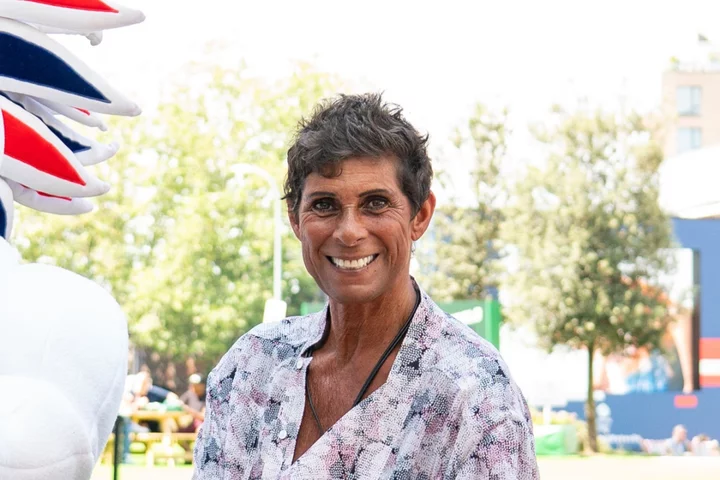
Misconceptions including being single or too old are said to be putting people off fostering at a time of dire need for more carers, as Olympian Fatima Whitbread and poet Lemn Sissay front a new recruitment campaign. Radio presenter Pandora Christie has also joined efforts to get more people to consider fostering, as the trio – who all had experience living in care as children – shared photographs of their younger selves in support of the campaign. The National Fostering Group (NFG), which describes itself as the largest network of independent fostering agencies in the UK, said its research had shown thousands of carers are needed across Great Britain. Sissay, who has previously detailed his experiences in the British care system, said fostering or adoption is “the greatest thing a human being can do for another”, while Whitbread, who grew up in children’s homes, said it is “a unique chance to make a real difference to a child’s life”. The NFG described the care system as being “at a critical point” and said information it had received from 128 local authority fostering agencies in England, Scotland and Wales suggested almost two thirds of those had seen a rise in young people going into care in the last 12 months and an estimated 10,500 foster carers are now “urgently needed across the country”. But its polling of 2,000 adults suggested less than a fifth (14%)of people would consider fostering – a figure the NFG said could be higher if certain misconceptions were not held. More than a third (34%) of people felt they were too old to foster – with most of those who said this in the 65-plus age bracket, but 18% aged between 55 and 64 and 11% aged 45 to 54, the NFG said. Other reasons included already having their own children (13%), being single (13%), working (11%) and being disabled (9%), it added. Steve Christie, chief executive of the NFG said: “Many people perceive there to be barriers to becoming a foster carer that simply aren’t true. “We will consider people regardless of age, marital status, gender, sexuality, disability or employment status. “Anyone who has room in their home and their heart could be a foster carer, and most of our foster carers say that fostering is the best thing they have ever done.” Backing the campaign, Olympic javelin champion Whitbread said: “Foster carers offer children and young people a safe, loving and nurturing home when they can’t live with their birth families. This means they have a unique chance to make a real difference to a child’s life.” Heart radio presenter Christie, who went into foster care aged nine, said: “Foster parents are fundamental in creating a safe home environment and support system for children and young people who find themselves needing care. “The amount of futures they help to change and the difference foster parents can make to a child’s life is indescribable.” Sissay, who wrote about his time in care in his autobiography, My Name Is Why, said: “A child will test you emotionally, spiritually, financially, throughout your life, so to foster or adopt a child is the greatest thing a human being can do for another.” For more information on fostering, visit www.nfa.co.uk. Read More 5 key coat trends to complete your autumn/winter wardrobe 12 ways to weave some woodland wonder into your home Hibernation mode: 5 small self-care adjustments to make before the clocks change 13 possible cancer symptoms you should get checked out Neglecting women’s health at work could cost UK economy £20.2bn a year – analysis Nearly three-quarters of mothers feel invisible, study suggests
2023-10-26 16:27
Gaza Strip's Palestinians polarized by unorthodox watermelon delicacy
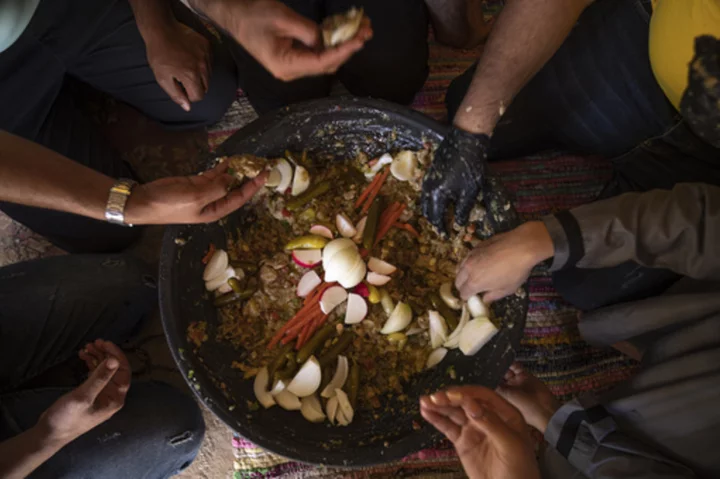
Palestinians in the southern Gaza Strip call it “watermelon salad.”
2023-05-31 14:46
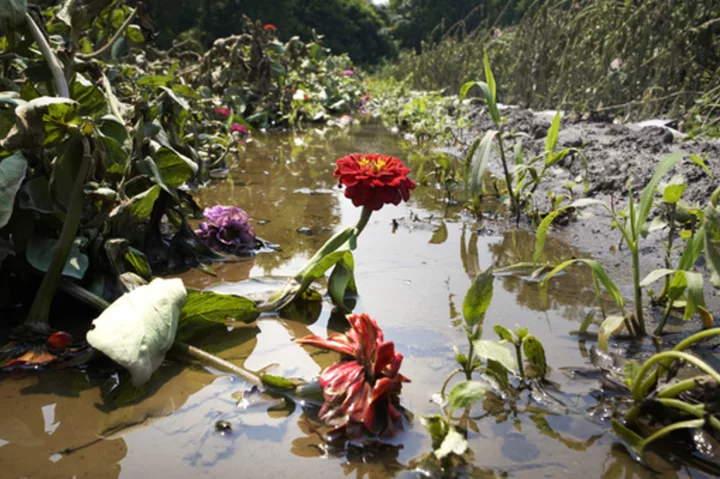
Where flooding has become more frequent, here's how gardeners can respond
Atmospheric scientists say extreme rainfall is more frequent now, and many parts of the world have seen flooding this summer
2023-08-01 20:27
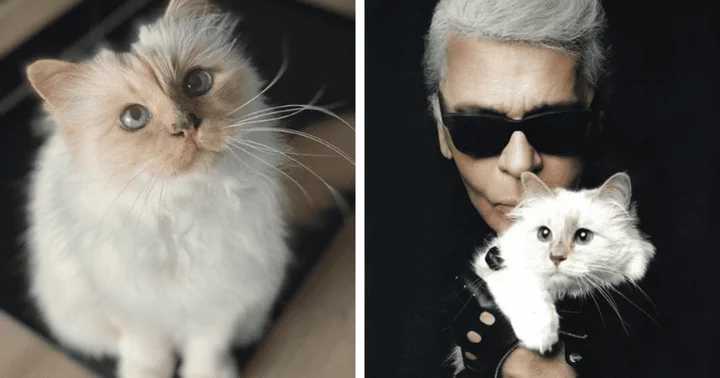
'She is an heiress': Karl Lagerfeld's cat Choupette received $1.5M in inheritance after fashion designer's death
Choupette's social media revealed that she flies on magnificent private jets and travels in elegance in a $250 Lucy Balu x Choupette or a $2,000 Louis Vuitton bag
2023-05-09 11:20
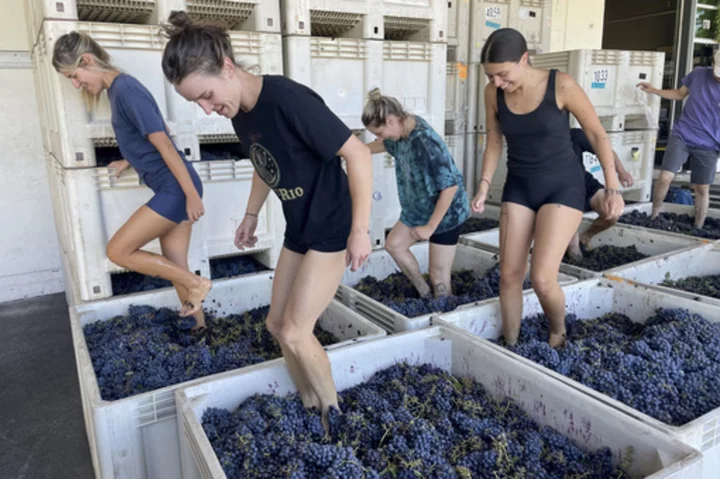
The ancient ways of natural wine is finding new fans
Natural wine is gaining a following in the U.S. even as overall wine sales drop
2023-10-16 17:24

Trump news – live: Trump rails against ‘villains’ as he is named ‘Man of the Decade’ at Michigan GOP dinner
Donald Trump railed against a list of “villains” including electric vehicles (EVs), President Joe Biden and “radical left lunatics” as he delivered a speech in the battleground state of Michigan on Sunday night. The former president spoke before 2,500 supporters at Oakland County GOP’s Lincoln Day Dinner, where he was honoured by the party as its “Man of the Decade”. During the event, he claimed that electric vehicles would result in the “decimation” of the state’s traditional auto industry and claimed that his criminal indictments are “bulls***”. Michigan could be a key focus of the 2024 race after Mr Trump won the state in 2016 but lost it to Mr Biden in 2020. His appearance came one day after he told a crowd of evangelicals on Saturday that the federal government has a “vital role” in the restriction of abortion access and once again took credit for overturning Roe v Wade. But the former president did not detail his proposal for national abortion restrictions at the Faith & Freedom Coalition conference in Washington DC, in contrast to his 2024 rival Mike Pence, who said he supports outlawing care nationally at 15 weeks of pregnancy. Read More Trump celebrates anniversary of anti-abortion ruling as he tells religious crowd ‘I’m getting indicted for you’ Trump declares himself the ‘most pro-life’ president in American history Biden warns Republicans aren’t done with abortion bans as protesters hit streets on anniversary of Roe’s fall Trump quietly changes political fundraising site to funnel funds toward legal woes
2023-06-26 17:28
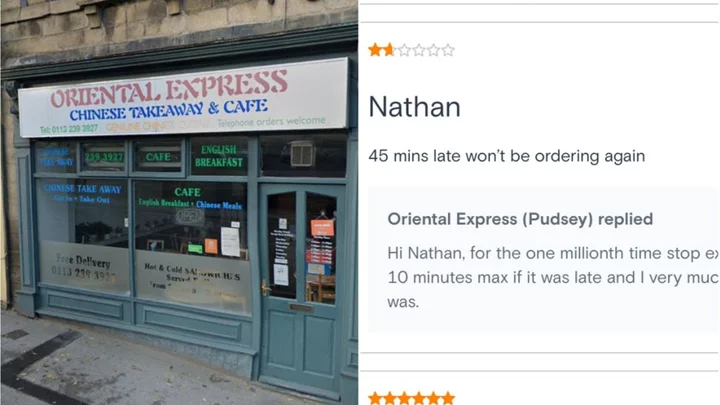
Chinese takeaway goes viral for savage responses to customers
The owner of a Chinese takeaway has become an internet icon for her fiery responses to disgruntled customers. Alice Cheung, the boss of Oriental Express restaurant in Pudsey, West Yorkshire has garnered 149 reviews on Just Eat – and she’s made a point of personally replying to every negative one. While most customers award the eatery five or six stars, Cheung refuses to pander to the complaints of some of the “sillier” reviews, she told Leeds Live. So when one woman complained that the food was “terrible”, she was having none of it. Sign up to our new free Indy100 weekly newsletter “You ordered a Vegetarian Munch Box and then called the shop to complain there was no MEAT in it,” Cheung wrote back. “We sent what you ordered and there was nothing wrong with it. The bad review is to cover your error,” she continued, before ending the response: “Please do not call again.” Another reviewer moaned that her meal was “not good, soggy and old” and that she “threw most of it away,” before condemning it for being much more expensive than her regular takeaway. Cheung, or rather Oriental Express, replied: “I suggest you stay with the other takeaway and take your false review with you.” Responding to a one-star reviewer, whose full comment has been deleted, Cheung wrote: “What sort of idiot orders ‘Salt & Pepper Chicken’ and then complains it has salt in it, our delivery record shows it was NOT late and it was NOT cold. “A fake review and derogatory too. Take your foul mouth and business somewhere else.” Another critic – who offered the restaurant a similarly measly two stars out of six – said her meal had been “totally ruined” by “small pieces of battered dry chicken mixed in with battered prawns.” The furious response read: “Will you please open your eyes and read the descriptions, you ordered the ‘Special sweet and sour’ which contains king prawns. You got what you ordered so how is this our fault? “The food was fresh and perfectly cooked. We are good but mind reading the stupid is not one of our skills.” Another two-star reviewer failed to write a justification for his low score. So Cheung replied sardonically: “Thank you Kyle, whay? Too much food, too hot, too tasty, delivered too quickly?” Speaking to Leeds Live, Cheung defended her tough tactics: “If you’re writing a review just be honest about the situation,” she said. "If we messed up, we’ll reply seriously. If not, expect some banter.” Have your say in our news democracy. Click the upvote icon at the top of the page to help raise this article through the indy100 rankings.
2023-07-20 22:47

Colombia mulls future of massive coal mine as water dries up
Colombia's massive El Cerrejon coal mine has landed in the crosshairs of President Gustavo Petro, who has blamed the open-pit operation for plunging the local Indigenous...
2023-09-08 09:25

5 Hot-Weather Makeup Tips That Make Getting Ready So Much Faster
Summer makeup is notoriously tricky, as you’ll already know if you’ve ever watched self tanner drip down your calves on a hot day or caught your reflection to see that the blush you applied just hours earlier had seemingly evaporated. In an effort to decrease the likelihood of makeup mishaps this summer, I sat down with a few professional artists to get their advice on the perfect warm-weather makeup routine. There are a few careful tweaks I made to my own process that made a huge difference — and saved me a lot of time getting ready in the process.
2023-05-27 04:53
You Might Like...

Five times a manhole cover stopped F1 in its tracks

Disgraced former entertainer Rolf Harris has died- UK's PA Media

21 Brands To Support During Latine Heritage Month & Beyond

Instagram attempts to explain 'shadowbanning', but creators still aren't happy

good2grow takes flavor and volume to the max with launch of BIGGER juice line

A Week In Bend, OR, On A $222,000 Joint Income
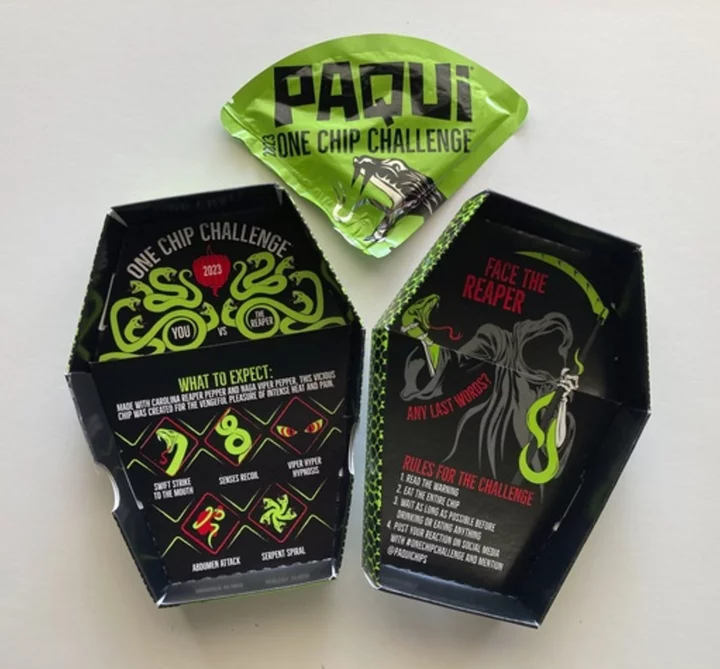
Massachusetts investigates teen's death as company pulls spicy One Chip Challenge from store shelves

This stacked MBA training course bundle is on sale for 87% off