

Serena Williams welcomes her second child with husband Alexis Ohanian: ‘Beautiful angel’
Serena Williams and husband Alexis Ohanian are officially the parents of two. Williams, 41, shared a video to TikTok on 22 August to announce the arrival of her second child. The one-minute video started off with Ohanian looking at a computer and sitting at a table, before his wife sat down next to him. The pair were then joined by their five-year-old daughter Olympia. The video went on to show Williams leaving the room, before she returned with her newborn baby in her arms. After the tennis star exchanged a kiss with her husband, Olympia leaned toward them to give her little sister a kiss on the forehead. The clip ended with a few sweet snaps of the now family of four. In the caption of the video, which was set to Bazzi and Camila Cabello’s hit song, “Beautiful”, Williams wrote: “Welcome my beautiful angel.” Ohanian also shared a photo of himself and his family on Instagram to announce the baby news, revealing his child’s name: Adira River Ohanian. He continued the caption of his post by expressing his gratitude for his second daughter and wife, along with the doctors who cared for them. “I’m grateful to report our house is teaming with love: a happy & healthy newborn girl and happy & healthy mama,” he wrote. “Feeling grateful. @serenawilliams you’ve now given me another incomparable gift - you’re the GMOAT. Thanks to all the amazing medical staff who took care of my wife & our daughter,” he wrote. “I’ll never forget the moment I introduced @olympiaohanian to her baby sister.” In the comments, many fans and famous faces went on to celebrate the newest addition to Ohanian family. “Congratulations!!!! Such a beautiful family. I’m so happy for you guys!!!!!!,” LaLa Anthony wrote, while another fan added: “Congratulations on your beautiful baby girl! Such a beautiful family! I love her name.” A third commented: “Such a blessing! So happy for you both.” During the Met Gala earlier this year, the Grand Slam winner first revealed that she was expecting her second child. As she walked the red carpet alongside her husband in May, Williams showcased her baby bump in a black long-sleeves dress with a deep neckline and a white tulle skirt. She also celebrated the news on Instagram at the time, writing: “Was so excited when Anna Wintour invited the three of us to the Met Gala.” Earlier this month, Williams and Ohanian also shared that they had an adventure-themed gender reveal party to unveil the sex of their baby. In a video shared to the tennis star’s YouTube account, which documented the “baby shower slash gender reveal” event, Ohanian had arranged for a drone display in the sky to reveal to his wife that they were having a girl. @serena Welcome my beautiful angel ♬ original sound - Serenawilliams Prio to sharing the display, the Reddit founder pulled a gender reveal prank on his partner by giving her a decoy cake that was yellow inside, instead of the usual blue or pink to indicate what the baby’s gender is. The arrival of Williams’ second child came one year after she revealed that she was retiring from tennis. In an essay for Vogue in August 2022, she wrote that she was leaving the sport to focus on her family, as she expressed how Olympia had often told her that she wanted to be a big sister. “Believe me, I never wanted to have to choose between tennis and a family,” she wrote. “I don’t think it’s fair. If I were a guy, I wouldn’t be writing this because I’d be out there playing and winning while my wife was doing the physical labour of expanding our family. Williams continued: “Don’t get me wrong: I love being a woman and I loved every second of being pregnant with Olympia… But I’m turning 41 this month and something’s got to give.” Read More Serena Williams celebrates second pregnancy with ‘pre-push party’ Pregnant Serena Williams pokes fun at sister Venus’ hilarious response to gender reveal prank Serena Williams and Alexis Ohanian share gender reveal party footage with fans Serena Williams celebrates second pregnancy with ‘pre-push party’ Exercise apps could help boost healthcare workers mental health Alabama Barker shares autoimmune, thyroid disease struggle amid body-shaming comments
2023-08-23 03:54
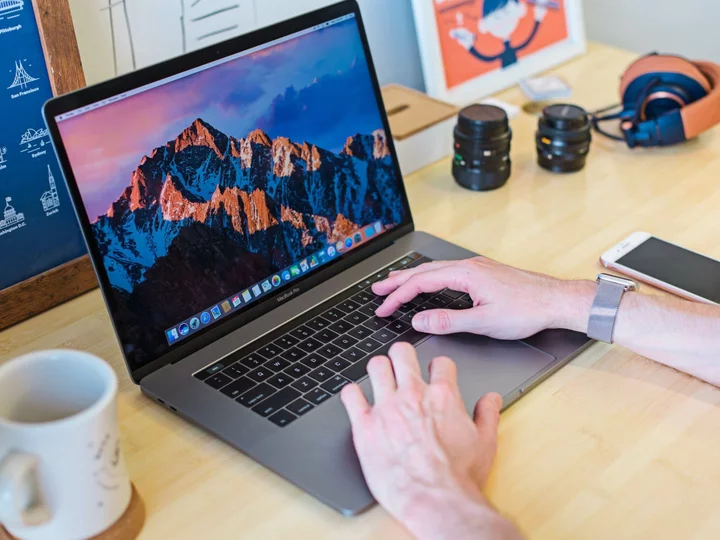
Score a refurbished MacBook Pro for under $500
TL;DR: As of June 24, get a refurbished MacBook Pro for only $469.99 — you'll
2023-06-24 17:50

Remy Cointreau confident on H2 rebound after weak start to the year
PARIS French spirits group Remy Cointreau on Tuesday reported a well-flagged 35% fall in first quarter organic sales,
2023-07-25 13:54
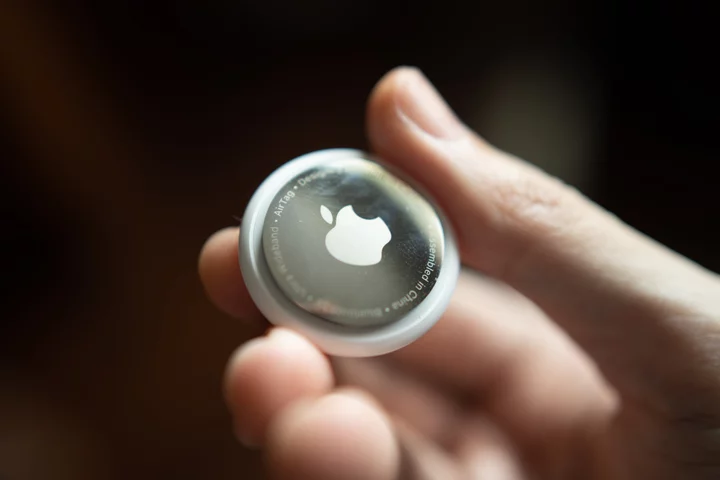
How to get alerts for unknown AirTags on an Android
Google has officially rolled out unknown tracker alerts, making it harder for people to covertly
2023-08-12 16:49

Irregular sleep patterns linked to harmful gut bacteria, study suggests
Irregular sleep patterns may be linked to harmful bacteria in your gut, new research suggests. The study is the first to find multiple associations between social jet lag – the shift in internal body clock when sleeping patterns change between workdays and free days – and diet quality, diet habits, inflammation and gut microbiome (bacteria) composition. According to the findings, even a 90-minute difference in the midpoint of sleep – half-way between sleep time and wake-up time – can encourage microbiome that has negative associations with health. Previous research has suggested that working shifts disrupts the body clock and can increase risk of weight gain, heart problems and diabetes. This is the first study to show that even small differences in sleep timings across the week seems to be linked to differences in gut bacterial species Dr Wendy Hall King’s College London However, according to researchers from King’s College London there is less awareness that the body’s biological rhythms can be affected by smaller inconsistencies in sleeping patterns. This is due to people working regular hours waking early with an alarm clock on workdays compared to waking naturally on non-workdays. Senior author Dr Wendy Hall from King’s College London, said: “We know that major disruptions in sleep, such as shift work, can have a profound impact on your health. “This is the first study to show that even small differences in sleep timings across the week seems to be linked to differences in gut bacterial species. “Some of these associations were linked to dietary differences but our data also indicates that other, as yet unknown, factors may be involved. “We need intervention trials to find out whether improving sleep time consistency can lead to beneficial changes in the gut microbiome and related health outcomes.” First author Kate Bermingham, from King’s College London and senior nutrition scientist at ZOE, said: “Sleep is a key pillar of health, and this research is particularly timely given the growing interest in circadian rhythms and the gut microbiome. “Even a 90-minute difference in the mid-point of sleep can encourage microbiota species which have unfavourable associations with your health.” Researchers suggest the composition of the microbes in the gut may negatively or positively affect health by producing toxins or beneficial products. Specific species of microbes can correspond to an individual’s risk of long-term health conditions such as diabetes, heart disease and obesity. The microbiome is influenced by what food someone eats, which makes the diversity of the gut adjustable. Researchers assessed a group of 934 people from the ZOE Predict study, the largest ongoing nutritional study of its kind. They looked at blood, stool and gut microbiome samples, as well as glucose measurements in people whose sleep was irregular compared to those who had a routine sleep schedule. Unlike past research, the group consisted of mainly lean and healthy individuals with most of them getting more than seven hours sleep throughout the week. The study, published in The European Journal of Nutrition, found that just a 90-minute difference in the timing of the midpoint of sleep is associated with differences in what the gut microbiome is made up of. According to the findings, having social jet lag was associated with lower overall diet quality, higher intakes of sugar-sweetened beverages, and lower intakes of fruits and nuts. This may directly influence the abundance of specific microbiota in the gut, researchers say. Three out of the six microbiota species more abundant in the social jet lag group have what researchers describe as unfavourable associations with health. They are linked with poor diet quality, indicators of obesity and cardiometabolic health, like heart attack, stroke, and diabetes, and markers in your blood related to higher levels of inflammation and cardiovascular risk. Previous research has found social jet lag is associated with weight gain, chronic illness and mental fatigue. Dr Sarah Berry from King’s College London and chief scientist at ZOE added: “Maintaining regular sleep patterns, so when we go to bed and when we wake each day, is an easily adjustable lifestyle behaviour we can all do, that may impact your health via your gut microbiome for the better.” Read More Charity boss speaks out over ‘traumatic’ encounter with royal aide Ukraine war’s heaviest fight rages in east - follow live N-Dubz cement comeback with first new album in 13 years Babies as young as four months have taste in fine art, study shows ADHD symptoms in children can be transformed with brain stimulation therapy
2023-08-02 17:28
We Have An Exclusive 30% Discount On A Sustainable, Editor-Approved Brand
Super Sale Alert: Get 30% off sitewide & 50% off the annual membership at Wearwell using our promo code REFINERY29, now through October 23.
2023-10-17 23:27
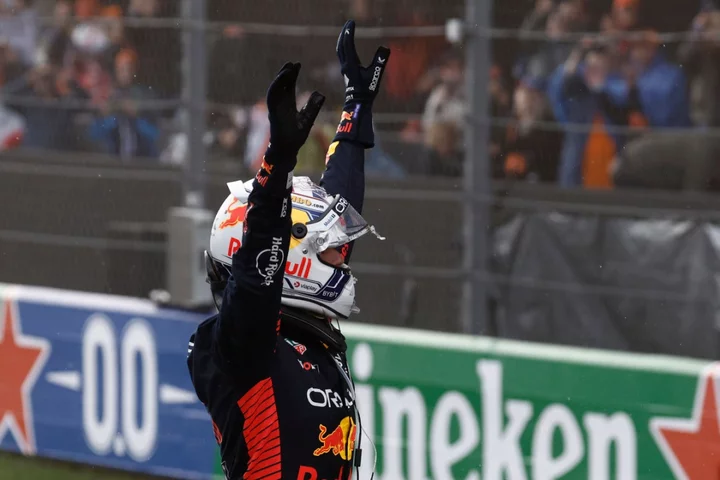
Nine in a row: Max Verstappen wins Dutch Grand Prix to equal Formula One record
Max Verstappen navigated his way through a chaotic and dramatic rain-hit Dutch Grand Prix to equal Sebastian Vettel’s record of nine victories in a row. Pole-sitter Verstappen found himself down in 13th place after seven drivers – including Red Bull team-mate Sergio Perez – took advantage of a sudden first-lap downpour to move on to wet tyres. The Dutchman regained the lead on lap 13 of 72 only for the race to be red-flagged with just eight laps to run after Zhou Guanyu crashed out following a second heavy shower. A 43-minute suspension followed as the tyre barrier at the opening corner was repaired. But Verstappen beat Aston Martin’s Fernando Alonso in a six-lap dash to the chequered flag to match Vettel’s streak, set in 2013. Perez finished third but was demoted a place after he was hit with a five-second penalty for speeding in the pit lane, allowing Pierre Gasly to take the final spot on the podium. Carlos Sainz finished fifth, holding off Lewis Hamilton, with Lando Norris seventh. George Russell was forced to retire his Mercedes following a late duel with Norris. Verstappen, whose Red Bull team remain unbeaten this season, extended his championship lead from 125 points to 138 ahead of next weekend’s Italian Grand Prix in Monza. Dark clouds gathered in the minutes ahead of Sunday’s round in Zandvoort, 30 miles outside of Amsterdam, and just a handful of corners into the start, the heavens opened. While Verstappen and the leading pack tiptoed their way round the 2.65-mile circuit, Perez – who started in seventh – was called in by his quick-thinking Red Bull team for the intermediate tyres. With the rain still falling, Verstappen sensibly stopped the next time round but McLaren’s Lando Norris and the Mercedes of Russell stayed out on the slick rubber despite the worsening conditions. Hamilton, who started 13th, was also sent round for another lap despite the seven-time world champion’s obvious concerns. “We should have come in, man,” he said over the radio. “It is very wet.” “Copy, Lewis,” said his race engineer Peter Bonnington. “We’re going to stay out. We’re going to have to brave this.” But at the end of the third lap, Hamilton was in for wet tyres. He rejoined the track in last place. Russell was still sliding around on slicks before he was changed on to the wet rubber at the end of lap four. When the dust settled, Hamilton and Russell occupied 16th and 18th places. “I was forecast a podium,” said Russell on the radio. “F***, how did we mess this up?” By now the rain had relented and dry line was already starting to emerge, and, despite his early handicap, the all-conquering Verstappen was, predictably, on the march. On lap six he raced past Gasly for third before moving up to second a lap later as he blasted ahead of Zhou. Perez was seven seconds up the road. Verstappen was taking chunks out of Perez – on one lap as many as four seconds – before he reverted to slicks on lap 11. Perez stopped the next time round but emerged three seconds behind the flying Dutchman, who was now back in the lead, and back in control. On lap 15, Logan Sargeant was back in the wall a day after crashing out in qualifying. The American was unharmed but the safety car was deployed to retrieve his machine. Mercedes called Russell in for his third stop of the afternoon, putting him on the hardest, durable tyre in the hope it would see him through to the end of the race. With Sargeant’s wounded Williams out of the way, the race resumed on lap 21. Verstappen controlled the restart to leave team-mate Perez trailing. Verstappen raced off into the distance with Hamilton and Russell beginning their fightback through the pack. The Mercedes men were back in the top 10 but with only a dozen laps remaining, the rain returned with vengeance. The drivers were back in the pits for intermediate tyres before Perez spun his Red Bull at the opening corner and lost second to Alonso. As the downpour intensified, Alfa Romeo’s Zhou aquaplaned at the first corner and thudded into the tyre wall. Hamilton also ran off at the opening bend but managed to keep his Mercedes out of the barriers and rejoined the track. Race director Niels Wittich red-flagged the race. After a lengthy suspension the event was back under way at 5.14pm local time with two laps behind the safety car and a rolling start. Alonso sensed his first win in a decade but despite the tricky conditions, Verstappen kept Alonso behind, crossing the line 3.7 seconds clear of the Spaniard. Read More Charity boss speaks out over ‘traumatic’ encounter with royal aide Ukraine war’s heaviest fight rages in east - follow live Max Verstappen reveals Sebastian Vettel prediction as he closes on GP record run Max Verstappen is one of the best drivers in F1 history – Lando Norris Daniel Ricciardo ruled out of Dutch Grand Prix after breaking wrist in practice
2023-08-28 00:26

How has your life changed since the Roe v. Wade reversal?
What impact has the Roe v. Wade reversal had on you and your family in ways big and small? Share your stories with CNN.
2023-06-03 01:57
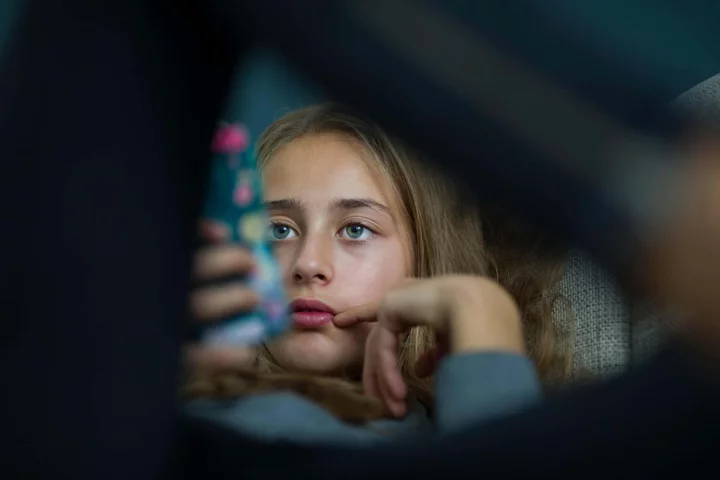
My teenager gets all their news from TikTok – should I worry?
Journalists are no longer the gatekeepers. The reality is that many young people are now bypassing the websites and apps of traditional news outlets and seeking information on social media platforms, including TikTok. It’s the ‘fastest growing social network’, according to the Reuters Institute Digital News Report, and new research has found that 20% of 18-24 year olds use the app solely to find their news. While a massive 44% of that age group use the short-form video hosting service for any and every other purpose. The younger generation have “little interest in many conventional news offers oriented towards older generations’ habits, interests, values, and instead embrace the more personality-based, participatory, and personalised options offered by social media”, said Reuters Institute director Rasmus Nielsen. Under 18s are big users too, so for parents whose teens get their news via TikTok, what do you need to understand about the social network and the evolution of digital media literacy? What is TikTok? Every so often a new app emerges and redefines the way we use social media. It’s what TikTok went and did in 2016. Starting as a small niche social media network – founded by Chinese tech giant Zhang Yiming – that attracted lip-synching teens as a short-form video hosting site, it almost knocked Facebook off its perch, and blew up during the coronavirus pandemic to a mega global platform. Do news organisations share news on it? Yes, they do. In many ways, traditional news organisations were forced to join TikTok to avoid being left behind, reach new and younger audiences and ensure they are continuing to find creative ways to pivot in a constantly evolving digital space. “Given the popularity and high engagement level, it’s not surprising that TikTok has become an important news platform for younger audiences, and it makes sense that news organisations are using it,” said Mark Brill, a senior lecturer in Future Media at Birmingham City University. “This, however, is a continuation of an existing trend. For well over a decade social media such as Facebook has been the primary news source for under 25s.” Anna Lee, founder at the Fr. App, added: “We can see that Gen Z individuals are turning to TikTok for any and all searches. While the funniest sound bites and newest dance trends will always have a home on TikTok, you can also equally expect to find videos explaining an arbitrary housing act.” How is it shared? There are various types of videos that can be shared on TikTok. Alongside the short bite-sized videos sharing the latest news, you can share trending sounds, things creators have posted, or videos with friends, family, and your larger community within TikTok or through other social media platforms. Videos can also be shared directly to other users, as long as the user has allowed for it. How do algorithms work? The TikTok algorithm is a recommendation system that determines which videos will appear on your (unique and highly personalised) For You page, which is also known as the homepage. Brill, who has 25 years of experience applying emerging technologies to engage audiences, said: “Much of the success of TikTok is the way that their algorithm decides which videos to show their users. TikTok’s system is based entirely on their interests and previous viewing. “This ‘more of what you like’ approach means that users spend more time each month in TikTok than any other platform. In the UK it adds up to over 27 hours per user per month and 23 hours globally. It shows how the platform’s algorithm can be highly addictive.” Is it OK that TikTok is how young people learn about what’s happening in the world? Some experts believe it is important for young people to be taught digital literacy at an increasingly earlier age – especially with the prevalence of fake news and artificial intelligence and its ability to forge fake articles and pictures. “Users of TikTok and all other social media apps must understand how to evaluate every piece of information they come across,” Lee said. “All parents worry about their child viewing harmful content on the internet. However, most leading internet providers provide extensive parental controls, including blocking and filtering unsuitable content.” Should they be encouraged to look elsewhere? For Brill, there are both benefits and challenges from using social media as a news source. He also cites the recent Reuters Institute report, which noted that TikTok users tend to look for good-news stories, avoiding the ‘doom scrolling’ found in web-based internet sites, which can have a negative impact on mental health. “The big question with social media sources, however, is that of veracity. A lack of fact checking and or acknowledgment of authoritative sources makes it difficult to identify fake stories and information. The short-form video format does not bring an in-depth analysis, where opinions are often presented as fact,” he said. “Perhaps the biggest challenge for TikTok users is with the algorithm itself. By giving more of what they like, it leads to confirmation bias that reinforces existing perceptions.” While child and behavioural expert Amanda Jenner, would encourage parents to tell their children to look elsewhere. “I am not a believer in directing children to learn through TikTok at all. Children can easily become addicted to social media and [it] can quickly escalate and [they could] be looking at other things they shouldn’t be watching. “I genuinely do feel parents need to be worried. I would encourage parents to set an age where it’s acceptable to have TikTok (over the age of 13 preferably) and have a parental control app so you can monitor and control what both they are seeing and the amount of time they spend on [it]. They need to be safeguarded.” Who knows what social network will be the next big thing but right now it’s difficult to get young people to migrate to another platform. Read More Charity boss speaks out over ‘traumatic’ encounter with royal aide Ukraine war’s heaviest fight rages in east - follow live How to take care of pets in the heat Struggling with menopause symptoms in the heat? An expert shares tips Men and women with migraine both have increased risk of stroke – study
2023-06-15 00:16

'All the Light We Cannot See' review: A sweet, if heavy-handed, adaptation of a beloved novel
August, 1944. American aircraft bomb the Nazi-occupied French city of Saint-Malo. In a townhouse, a
2023-09-11 03:25
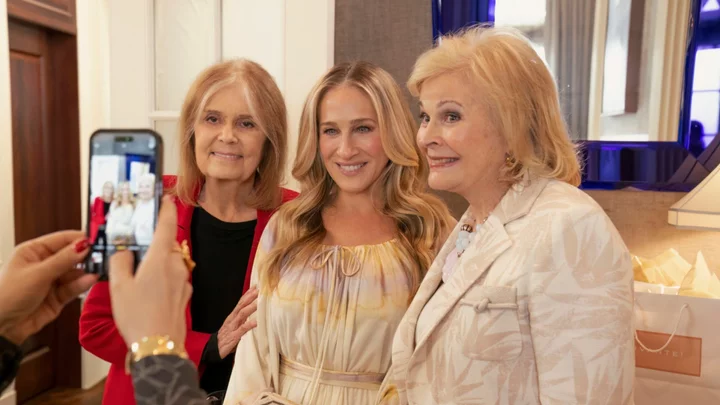
And just like that, Gloria Steinem makes a cameo in 'Sex and the City'
And Just Like That... has strived to prove itself socially-conscious throughout its one-and-a-half released seasons.
2023-07-06 23:27
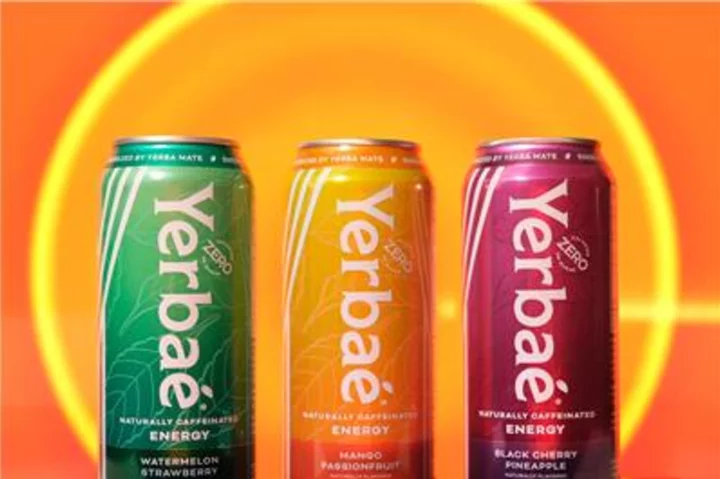
Yerbaé Expands Into the Southeast Region of the Largest Club Store Chain in the United States
SCOTTSDALE, Ariz.--(BUSINESS WIRE)--Jul 19, 2023--
2023-07-19 20:27
You Might Like...
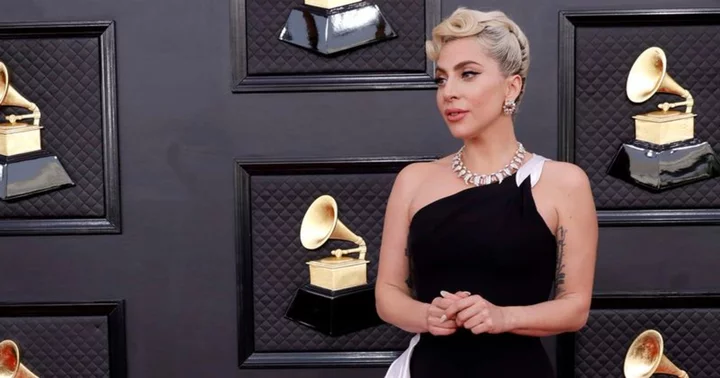
'Authentically her': Lady Gaga shares glowing makeup free selfie and leaves fans in awe
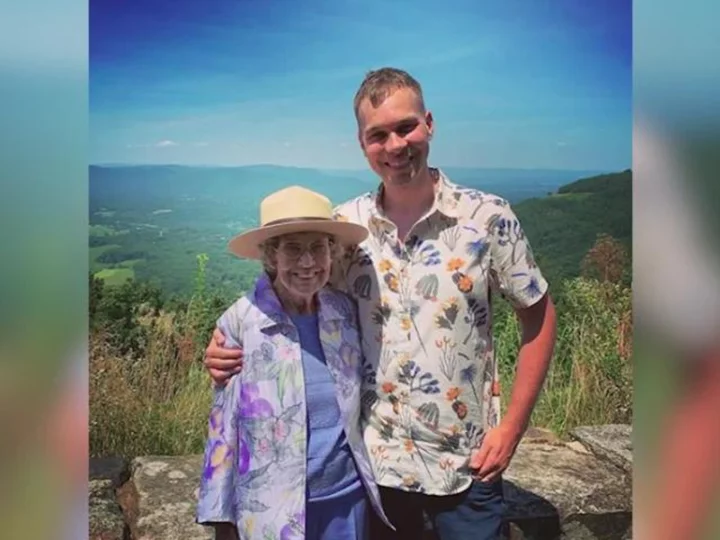
93-year-old woman and grandson complete journey to all 63 US national parks

Trudeau Cuts Tax on Rental Builds, Pushes Grocers on Pricing
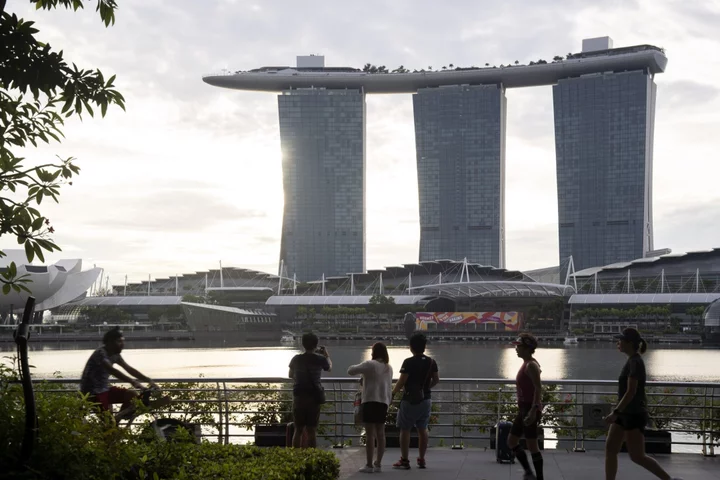
Singapore’s Marina Bay Sands Says It Was Hit in Data Breach

Cyprus allows human COVID-19 medications to be used on cats to fight deadly virus mutation
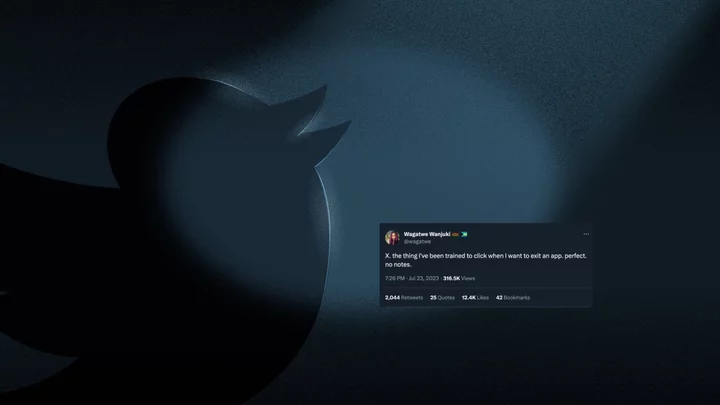
Twitter 'X' renaming gathers the internet to warm itself around the garbage fire
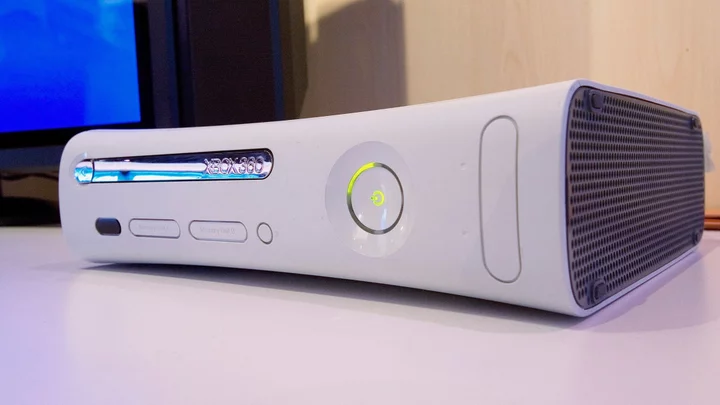
Xbox 360 Digital Store Is Closing Down in July 2024

The original 'Scott Pilgrim' cast returns for Netflix's anime adaptation