
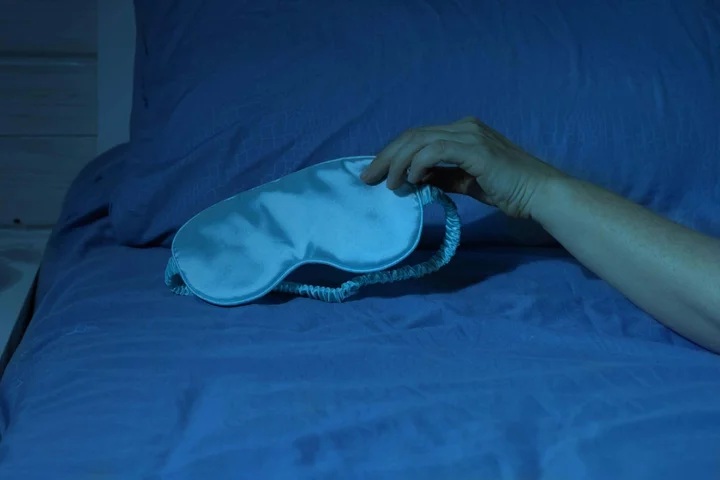
Regular daytime naps could be good for the brain, study shows
Regular daytime naps could be good for brain health, new research suggests. Daytime napping could slow the rate at which brains shrink as we age, the study led by researchers at UCL and the University of the Republic in Uruguay found. The researchers hope their findings into the health benefits of sleeping during the day will reduce any stigma that still exists around daytime napping. The study suggests the average difference in brain volume between people programmed to be habitual nappers and those who were not was equivalent to 2.6 to 6.5 years of ageing. Our findings suggest that, for some people, short daytime naps may be a part of the puzzle that could help preserve the health of the brain as we get older Dr Victoria Garfield, UCL Senior author Dr Victoria Garfield, MRC Unit for Lifelong Health & Ageing at UCL, said: “Our findings suggest that, for some people, short daytime naps may be a part of the puzzle that could help preserve the health of the brain as we get older.” The study, published in the journal Sleep Health, analysed data from people aged 40 to 69. Past research has suggested people who have had a short nap perform better in cognitive tests in the hours afterwards than those who did not nap. The new study looked at whether there was a causal relationship between daytime napping and brain health. Researchers looked at 97 snippets of DNA thought to determine people’s likelihood of habitual napping. They compared measures of brain health and cognition of people who are more genetically programmed to nap with people who did not have these changes in DNA, using data from 378,932 people from the UK Biobank study. They found that, overall, people predetermined to nap had a larger total brain volume. The genetic variants – DNA changes – influencing the likelihood of someone to nap were identified in an earlier study looking at data from 452,633 UK Biobank participants. But the researchers did not find a difference in how well those programmed to be habitual nappers performed on three other measures of brain health and cognitive function. Lead author and PhD candidate Valentina Paz, University of the Republic (Uruguay) and MRC Unit for Lifelong Health and Ageing at UCL, said: “This is the first study to attempt to untangle the causal relationship between habitual daytime napping and cognitive and structural brain outcomes. “By looking at genes set at birth, Mendelian randomisation avoids confounding factors occurring throughout life that may influence associations between napping and health outcomes. “Our study points to a causal link between habitual napping and larger total brain volume.” Dr Garfield added: “I hope studies such as this one showing the health benefits of short naps can help to reduce any stigma that still exists around daytime napping.” Read More Dramatic rise in the number of women freezing their eggs Paramedics who found ‘poisoned’ couple dead in Mexico hotel room also fell ill Bruce Willis’ family honours him with first Father’s Day tributes since announcing his dementia diagnosis Richard Ford on Frank Bascombe, getting older and literary feuds: ‘At my age I can’t get into fistfights’ Families’ ‘disappointment’ as Croydon tram disaster driver cleared
2023-06-20 12:29

A lot of older Twitter posts got wiped out by a glitch
Well, that's a bummer. X (formerly known as Twitter) has been around for a long,
2023-08-22 01:23

Save more than $900 on this refurbished MacBook Pro
TL;DR: As of July 24, get this 2017 refurbished Apple MacBook Pro 13.3" for only
2023-07-24 17:55

14 podcasts to teach kids about history, identity, and current events
As your child heads back to school, you may be looking for appropriate ways to
2023-08-11 17:48

First ever Florida Man games will feature beer belly wrestling and 'evading arrest' obstacle course
It ain’t the Olympics, but a group of Floridians plan to host competitions themed according to the collective antics of the beer-loving, gator-possessing, rap-sheet heavy, mullet-wearing social media phenomenon known as “Florida Man.”
2023-10-26 16:15

Microsoft Teams on Windows 11 Gets Discord-Like Communities Feature
Microsoft has rolled out its communities feature on Teams for Windows 11. The Discord-like feature,
2023-06-04 07:49
Woman says she was told not to breastfeed on flight because it would make passengers ‘uncomfortable’
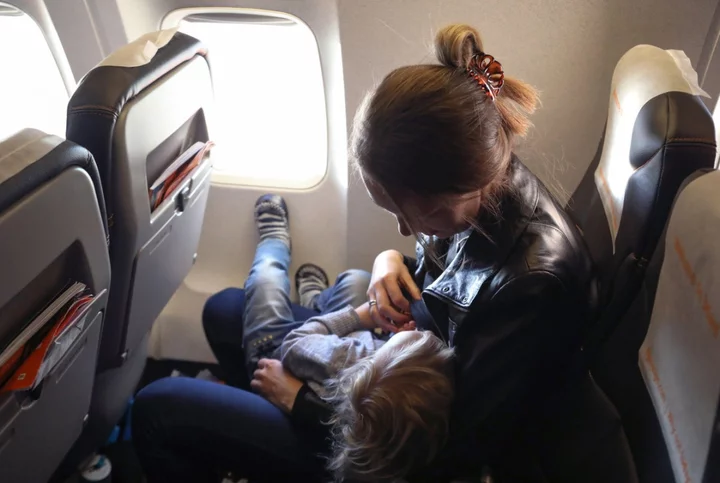
People are coming to a woman’s defence after she claimed that she was told not to breastfeed on a plane because it would make other travellers “uncomfortable”. Chelsea Williams took to Facebook on 7 August to describe what she says was her experience with TUI Airways, a British airline owned by the TUI Group. She claimed that while she was in her seat during a recent flight and breastfeeding her child, one of the plane’s crew members told her to stop. “During our outbound flight I was told I was not allowed to breastfeed (even though we were both buckled) during takeoff and landing,” she wrote. “I have never had this with other airlines, in fact, it is encouraged to help with baby ear pain!” She then claimed that, after the experience, she was encouraged to reach out to TUI about its travelling regulations. “Before my inbound flight, I thought I’d check what the official rules were as I was shocked it wasn’t allowed as it left my baby screaming as a consequence,” she wrote. William’s post went on to include the message that her husband, Thomas, sent to TUI, asking if his partner could breastfeed their five-week-old baby while their plane is taking off and landing. According to the screenshot of the message, TUI then responded by encouraging Thomas’ wife to avoid breastfeeding on the plane, for the sake of other passengers. “There are no official restrictions, however, we would not recommend it because it could make other people uncomfortable,” the message read. Williams also added that the response from TUI was “complete discrimination and majorly disappointing”. Speaking to The Independent, Williams said that while on her first flight with TUI, the airline employee tried to “disguise the airline’s discrimination with the guise of a ‘safety issue’ but later retracted that”. “The cabin crew member said: ‘You’ll need to stop feeding as it is not permitted on takeoff and landing,’” she explained. “She then said my five-week old had to forward face, I said that she doesn’t have sufficient neck support at that age, which was answered with: ‘Maybe you could just sit her against you facing forward and lean back a bit.’” She also specified that, despite what TUI had allegedly told her husband in its message, she was able to breastfeed her daughter on her flight back home. Her Facebook post has since gone viral, with more than 1,200 reactions. In the comments, many people have gone on to defend Williams while criticising TUI for its “damaging” message about mothers breastfeeding in public. “Oh TUI - it’s damaging comments like this that can deter women from breastfeeding or breastfeeding in public,” one person wrote. “What’s so offensive about feeding a baby and if people are uncomfortable about a baby feeding in the most natural way by milk that is designed for HUMANS then that is their issue not hers or her baby’s fault.” “If other people are allowed to eat and drink in public then why is breastfeeding our children not allowed. What a disgusting response!!!” another added. “To all the breastfeeding moms out there, keep going. We’ve got this. Screw what other people say and think. Just smile at them and carry on, that will make them uncomfortable!” “This is absolutely disgraceful!!” a third wrote. “I am flying with TUI next month and have every intention of breastfeeding during take off and landing whether anyone feels ‘uncomfortable’ or not!” TUI has since responded to the comments on Williams’ post, with the company stating that it is “aware of the situation and are conducting an internal investigation”. TUI also added that “breastfeeding is permitted” on its flights, while the company “advises against it during takeoff and landing for safety reasons”. According to the Centers for Disease Control and Prevention, mothers are encouraged to breastfeed their children “during takeoff and landing when travelling by airplane,” as “this will help to protect your child from ear pain due to cabin pressure changes”. The health agency also encourages mothers to feed their children “on demand,” noting that the best way for them to “maintain [their] milk supply is to breastfeed whenever [their] baby is hungry”. Speaking to Metro, Williams opened up about the breastfeeding incident during her first TUI Airways flight, which was from England to Spain. She said that after she stopped breastfeeding, after the airline employee had asked her to do so, her “baby was obviously crying”. “Quite drastically because I had cut her feed while she was in the middle of it - and the toddler was crying,” she added, referring to her two-year-old child. “I was sweating, I was on the verge of tears. I felt like everyone’s eyes were on us because obviously the baby was screaming and I obviously looked not great at that moment. The baby’s cries were getting worse – she was obviously in pain, she was obviously hungry as well.” Williams said that she waited until the seatbelt lights went off to start feeding her baby again. In a statement toThe Independent, TUI said: “We are really sorry for the distress caused to Ms Williams and her infant. As a family friendly travel company we support breastfeeding on our flights at any time. We will be making sure that all colleagues are retrained on our breastfeeding friendly policy.” Williams told The Independent that she “had a call with TUI” and talked to the company about some of the changes she hopes to see implemented. “They did sound receptive to some of the points raised, I will continue to push them to ensure these changes are made,” she said. Read More Breastfeeding Olympians want it all: Top careers and motherhood Ireland Baldwin reveals why she did not want to breastfeed her daughter after giving birth Couple flies abroad for day trip after they find flights are cheaper than train to London Americans spark backlash after claiming that Europeans ‘don’t believe in water’ Grimes says her and Elon Musk’s three-year-old child X ‘knows a lot about rockets’ What is TikTok’s ‘soft life era’ and could it be the secret to happiness?
2023-08-10 06:53

Trident Seafoods Welcomes the First Fish from Copper River, Marking the Kick-Off of the Copper River King Salmon Run
SEATTLE--(BUSINESS WIRE)--May 16, 2023--
2023-05-17 05:46
Texas women suing over anti-abortion law give historic and heartbreaking testimony in a landmark court case
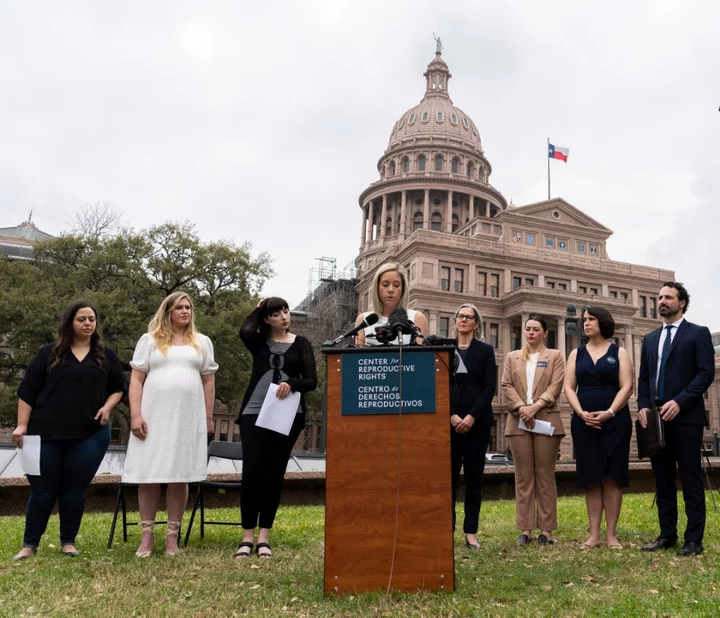
In March, unable to legally obtain abortion care in Texas, Samantha Casiano was forced to carry a nonviable pregnancy to term, and gave birth to a three-pound baby who died hours later. Ms Casiano is among 13 women denied emergency abortion care under state law who are suing the state in a landmark case that is now in front of a Texas judge. In harrowing, historic courtroom testimony in Austin on 19 July, Ms Casiano and two other plaintiffs described their agony, isolation and heartbreak as they detailed their traumatic, life-threatening pregnancies and the state’s failure to care for them. As she described her experience to the court through tears, Ms Casiano vomited from the witness stand. “I watched my baby suffer for four hours,” she said in her testimony. “I am so sorry I couldn’t release you to heaven sooner. There was no mercy for her.” Abortion rights legal advocacy group Center for Reproductive Rights Texas filed the lawsuit on behalf of the women in March to force Texas authorities to clarify emergency medical exceptions to the state’s overlapping anti-abortion laws, marking the first-ever case brought by pregnant patients against such laws. Their testimony has underscored the depth of impacts from Texas laws and similar anti-abortion laws across the country, with abortion access stripped away for millions of Americans who are now exposed to dangerous legal and medical minefields during their pregnancies. The conflicting exemptions for medical emergencies in Texas have resulted in widespread confusion among providers and hospitals fearing legal blowback or severe criminal penalties, according to abortion rights advocates. Healthcare providers in the state found in violation of those laws could lose their medical license, face tens of thousands of dollars in fines, or receive a sentence of life in prison. The plaintiffs “suffered unimaginable tragedy” directly because of the state’s anti-abortion laws, Center for Reproductive Rights attorney Molly Duane said in her opening arguments. Texas officials and the state’s medical board have “done nothing” to clarify the law, she said. “I feel like my hands are tied,” said Houston obstetrician-gynecologist Dr Damla Karsa. “I have the skill, training and experience to provide care but I’m unable to do so. It’s gut-wrenching. I am looking for clarity, for a promise that I’m not going to be prosecuted for providing care.” Attorneys for the state have sought to dismiss the case altogether, arguing in court filings that the women lack standing to challenge the law because it is ultimately uncertain they will face similar complications again, that their “alleged prospective injuries are purely hypothetical”, and that some of the plaintiffs admitted they have since “struggled to become pregnant” again after their traumatic experiences. Amanda Zurawski, the lead plaintiff in the case, is still hoping to become pregnant after her life-threatening pregnancy. She called the state’s argument “infuriating and disgusting and ironic.” “Do they not realise the reason why I might not be able to get pregnant again is because of what happened to me as a result of the laws that they support?” she told the court. “Anybody who’s been through infertility will tell you it is the most isolating, grueling, lonely, difficult thing a person can go through.” ‘I wished I was dreaming. I knew I wasn’t’ Ms Casiano, a mother of four, was hoping for a girl. When she visited her physician for a checkup last September, “all of a sudden the room went cold” and quiet, she testified. Her daughter was diagnosed with anencephaly, a fatal birth defect in which a baby is born without parts of a brain or skull. “My first thought was … ‘maybe it’s a surgery, maybe she can be fixed,’ and then she said, ‘I’m sorry, but your daughter is incompatible with life, and she will pass away before or after birth,’” Ms Casiano said. “I felt cold,” she said. “I was hurt. I wished I was dreaming. I knew I wasn’t. I just felt lost.” A case worker at her obstetrician’s office gave her a pamphlet with funeral homes. She was prescribed antidepressants. She could not be referred for abortion care anywhere in the state. Texas was the first to implement a near-total ban on abortion, months before the US Supreme Court struck down the constitutional right to abortion last June, a decision that triggered a wave of state laws and legislation from anti-abortion lawmakers and governors to restrict care and threaten providers with criminal penalties. Amanda Zurawski endured several rounds of fertility treatments, tests, surgeries and misdiagnoses before learning she was pregnant in May of last year. “We were at first in shock … we were over-the-moon excited,” Ms Zurawski said. But her obstetrician discovered that she dilated prematurely, and soon after her membranes ruptured, draining amniotic fluid and endangering the life of her expected child. Doctors informed her there was nothing they could do under what was recently enacted state law, despite knowing with “complete certainty we were going to lose our daughter,” she said. The condition led to life-threatening sepsis. Doctors ultimately induced labor. Her daughter, which she named Willow, was not alive when she delivered. Ms Zurawski and her husband are still trying for pregnancy, but the trauma has closed one of her fallopian tubes, and a doctor had to surgically reconstruct her uterus. They also are considering in vitro fertilization, surrogacy and adoption. She previously testified to members of Congress about her experience, a story she will continue to tell, even if it is “excruciating” to do so, she told the Texas courtroom. “I know that what happened to me is happening to people all over the country. … So many people are being hurt by similarly restrictive bans,” she said. She has spoken out “because I can, and I know a lot of people who are experiencing or will experience something similar who can’t speak out, and it’s for those people I will,” she said. Healthcare providers caring for pregnant patients in the months after the Supreme Court’s decision to overturn Roe v Wade have faced severe obstacles for providing standard medical care in states where abortion is effectively outlawed, leading to delays and worsening and dangerous health outcomes for patients, according to a first-of-its-kind report released earlier this year. Individual reports from patients and providers like those named in the Texas lawsuit have shed some light on the wide range of harm facing pregnant women in states where access to abortion care is restricted or outright banned. But reporting from the University of California San Francisco captures examples from across the country, painting a “stark picture of how the fall of Roe is impacting healthcare in states that restrict abortion,” according to the report’s author Dr Daniel Grossman. More than a dozen states, mostly in the South, have effectively outlawed or severely restricted access to abortion care after the Supreme Court’s decision in Dobbs v Jackson Women’s Health Organization last June. The decision has also opened new legal challenges, ones that could once again reshape the future of abortion access in America, while anti-abortion lawmakers and Republican candidates face a public that is overwhelmingly against such bans. ‘I don’t feel safe to have children in Texas anymore’ Ashley Brandt sent a picture of an ultrasound to her husband when she found out she was pregnant with twins. But after her 12-week ultrasound last May, doctors discovered one of the twins had acrania, in which the skull of the fetus is not formed, and brain tissue is exposed to amniotic fluid. The condition is fatal. Despite no chance of the twin’s survival, Ms Brandt was not eligible under Texas law for a procedure called a selective fetal reduction; Twin A still had some signs of life, like muscle spasms and cardiac activity. They traveled to neighbouring Colorado for care, and she returned home the day after the procedure. She gave birth to her daughter in November. “If I had not gone out of state and just done what was legal in Texas, my daughter … would likely have been in the [neonatal intensive care unit],” she said. “All of my ultrasounds leading up to labor I would have had to watch twin A … deteriorate more and more, every ultrasound. … I would have to give birth to an identical version of my daughter without a skull, without a brain, and I would have to hold her until she died, and I would have to sign a death certificate, and hold a funeral.” She said the state has failed to account for medical emergencies like hers. “I don’t feel safe to have children in Texas anymore,” she said. “It was very clear that my health didn’t really matter, that my daughter’s health didn’t really matter.” Read More ‘I felt I couldn’t tell anyone’: The stigma of abortion keeps women silent. It’s time for us to shout Ohio voters are likely to decide the future of abortion rights One year after Roe v Wade fell, anti-abortion laws threaten millions. The battle for access is far from over
2023-07-20 08:50

Folloze Plus Outreach Empowers Sales and Marketing With Advanced Orchestration to Engage Prospects and Further Pipeline Goals
SAN MATEO, Calif.--(BUSINESS WIRE)--Jun 1, 2023--
2023-06-01 21:15

How to livestream Giro d’Italia online for free
SAVE 49%: Watch Giro d’Italia livestreams from anywhere in the world with ExpressVPN. A one-year
2023-05-10 11:45

8 budget-friendly ways to juggle childcare and work during holidays
Idyllic images of happy children playing in sunny gardens during the summer holidays aren’t so easy to turn into a reality when you’re a working parent. Instead of wondering how full to fill the paddling pool, working mums and dads are more likely to be doing their sums about paying for the childcare they need so they can work as their kids enjoy the summer holidays. Emily Pritty, joint head of legal advice service at the charity Working Families, points out that its recent research found four in 10 low-income families have gone into debt to pay for childcare, nearly half have had to reduce their hours, and a fifth have even quit their job to manage childcare. “The summer holidays are a source of stress and anxiety for many working families whose work situation doesn’t allow them any flexibility to manage childcare and who can’t afford the additional childcare costs,” she says. “School holidays are the pinch point for so many working families with school-aged children, as the usual pattern of caring and routine changes, and the demands of work don’t reflect this.” But there are ways to make summer childcare more affordable for the UK’s 17.5 million working parents and carers, says Sabine Kobayter, chief marketing officer at Pebble, which connects parents with childcare and activity providers. “The summer holidays can be really hard for parents who are trying to juggle work and childcare – while also trying to feed hungry minds with activities that will stimulate children,” she says. “There’s a huge variance in the cost of finding childcare, and trips out as a family can quickly add up. The good news is there are many solutions to help find affordable ways to keep children entertained whilst spinning work plates too.” Here are budget-friendly summer childcare solutions suggested by Kobayter and Pritty… 1. Use holiday camps From sports camps to street dance, drama, academic and cookery, holiday camps start from £16.50 per day, says Kobayter. “Holiday camps are great as they often mirror the working day, and children can find camps that match their hobbies and interests,” she says, explaining that as holiday camps increase in popularity, the trick to getting a space is to book your child’s slot as early as possible. “This also allows you to plan your work schedule with the peace of mind knowing your children are being cared for, while doing something they love, and meeting new friends.” 2. Take paid or unpaid leave Many parents will have to use their annual leave to look after their kids over the summer, and if they don’t have enough left, unpaid leave is a statutory option, says Pritty. “The burden of taking unpaid time off does tend to fall more heavily on women due to the gender pay gap, as for family finances, often the decision is for the parent on the lower income to take the leave.” 3. Stretch out free childcare You’re entitled to 30 hours of free childcare in England, and Pritty suggests: “You could stretch your entitlement so you receive fewer hours each week but get the childcare during school holidays too.” Check whether your childcare provider will allow you to do this. 4. Get friends and family to help Many parents rely on informal networks of friends and family to help cover the gaps in caring throughout the year, and Pritty says: “This is particularly prevalent in school holidays, given the cost of holiday clubs and formal childcare. Parents often group together with friends to cover particular days and then reciprocate in a shared care arrangement.” 5. Use free kids’ activities “Not everything costs,” promises Kobayter, who suggests that if parents use annual paid/unpaid leave, or get friends and family to help with childcare, they keep subsequent costs down by searching for free activities local to them, and lock in days out as a family. “Museums, national parks, events in local parks – there’s a surprising amount available,” she says. 6. Try ad-hoc childcare Until recently, childcare needed to be locked in months, sometimes even years, in advance, says Kobayter, but now childminders and childcare providers are starting to enable ad-hoc bookings for parents in need. “As work becomes more flexible, childcare needs to as well,” she observes. “If you have a last-minute need to book childcare, all is not lost.” Pritty says the Family and Childcare Trust can provide details about your local Family Information Service, which will in turn be able to tell you about available summer childcare including childminders, nurseries, out of school clubs and any holiday schemes running in your local area. 7. Use vouchers if possible Childcare vouchers, tax-free childcare and the childcare elements of working tax credit and universal credit can all be used in holiday clubs, if the childcare is registered or approved, says Pritty, although she warns that not all childcare providers accept vouchers and they need to be signed up to tax-free childcare. You can check the types of childcare that you can get help with. 8. Check you’re getting the right financial help Pritty suggests parents check they’re getting the childcare support they are entitled to, by using this online calculator if necessary.
2023-07-04 15:49
You Might Like...
Coldplay Concert Drives Rush to Online Lending for Indonesians

Sports culture is ‘intimidating’ and putting people off working out, study finds

Verizon Offers Subscribers Unlimited Cloud Storage for $13.99 Per Month

Grab the Echo Pop — Amazon's latest smart speaker — for 43% off

Watch thousands of shows and movies for just $40
Power couple Zooey Zephyr and Erin Reed are spreading hope to fellow transgender people
Broadcasting veteran Anne Diamond reveals breast cancer diagnosis

Bundle Up In The Internet’s Best Winter Dresses, According To Warm & Happy Customers