'Barbie' robbed us of another iconic Ryan Gosling Ken moment
Right from the very first Barbie trailers, Ryan Gosling's Ken was an absolute standout. He
2023-07-22 06:16
A sudden drop off or just a blip? Max Verstappen provides the answer
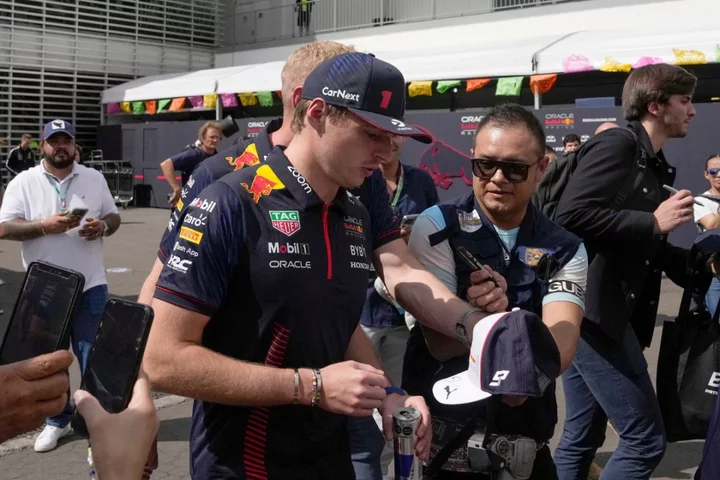
What made last Sunday’s pulsating Singapore Grand Prix so captivating was a genuine battle at the front: a battle for first, from lights out to the chequered flag. But it was only made possible by a clanger of a weekend from runaway constructors leaders Red Bull, whose perfect win-streak in 2023 came to an abrupt end amid the tight twists and turns of the city-state. Yet briskly onto Japan, a more conventional racetrack, would the status quo be restored? It certainly seems so. Judging by initial signs from Friday practice at Suzuka – a driver-favourite on the calendar due to its heart-shredding high-speed corners – it would be a major shock if Max Verstappen did not claim his 11th win in 12 races come Sunday. The flying Dutchman, closing in on the home-straight in his irrepressible march to a hat-trick of world titles, was fastest in both free practice sessions. And by some distance too. Six-tenths of a second in FP1, narrowed down to three-tenths by FP2. Ferrari’s Charles Leclerc and McLaren’s Lando Norris, in consistency unexpected from practice, were the next-best in both sessions. “It felt really good today,” said Verstappen, back to his customary satisfied self after the anomaly of Singapore. “From lap one, the car was really enjoyable to drive again. It seems we had a strong day on short runs and long runs. So far, we have a good start to the weekend. “It looks tight behind me between Ferrari and McLaren, they’re close. But we just focus on ourselves, try to optimise our performance and if we do that, then I’m confident we’ll fight for pole.” Last year’s frenetic Suzuka race in the rain, memorable for Pierre Gasly’s close shave with a repair vehicle, saw Verstappen crowned a two-time champion following a dramatic end with Leclerc handed an position-changing penalty. For so long, it seemed Suzuka would be the venue for his crowning glory again in 2023. But all Singapore did was delay the inevitable by a race: that moment is likely to come amid the sprint weekend in Qatar at the start of October. Norris, still chasing his first win after recording a ninth Formula 1 podium last week, struggled to hide his deflation at realising Christian Horner’s team were back in their usual flow. “I doubt it’s going to be pole [for us], Red Bull is normal Red Bull,” the Brit said. “The pace was there… but the car feels pretty all over the place. A handful. “I don’t think we’re far away. Challenging for pole is a big task and probably a bit too far – challenging Mercedes, Ferrari and Astons has to be our battle for tomorrow.” Mind you, Mercedes might count themselves fortunate to be included in that list, given their performance on Friday. Neither driver was in the top-10 in first practice, while Lewis Hamilton only managed a best-result of 14th in FP2. “It was a very challenging day for us out there,” said the seven-time world champion and five-time winner in Japan. “I had a lack of confidence in the car and that contributed to our struggles. It was difficult to find the right balance and we didn’t manage to get on top of it by the end of FP2. The tyres were overheating and that left us quite far off the top of the timing sheets. “We know we’ve got a lot of work to do tonight to pick up the performance. I do believe we can make improvements though. We have had similar Friday’s this season and come back stronger on Saturday. We will see tomorrow if we have done so again. We will be putting in the effort this evening to give us every chance of getting ourselves higher up the order.” Higher up the order is certainly obtainable. What is not, it seems, is a major weekend challenge to Verstappen. Last week was nothing but a blip. Stranger things have happened – and the last two pole positions have been claimed by Ferrari’s Carlos Sainz – but even on race simulations on Friday, the Red Bull was about a second-a-lap quicker on average than anyone else. Following qualifying on Saturday – bright and early in the UK (7am BST) – the racing on Sunday looks once again likely to be behind the champion-in-waiting. Read More Lewis Hamilton says ‘something’s up’ at Red Bull – if Max Verstappen struggles in Japan ‘Buzzin corner’: Sebastian Vettel reunites with F1 grid for ‘bee hotels’ in Japan Lando Norris calls for ‘harsher penalties’ after Max Verstappen incident How to buy tickets for the 2024 British Grand Prix at Silverstone ‘Buzzin corner’: Sebastian Vettel reunites with F1 grid in Japan F1 Japanese Grand Prix LIVE: Practice updates and times at Suzuka
2023-09-22 20:25
'Elemental' cast on the power of being vulnerable
Mashable's UK editor Shannon Connellan speaks to Elemental stars Leah Lewis and Mamoudou Athie about
2023-06-26 22:26
Kirby and Thor: Official brewery of Georgia athletics has Marvel ties
Look at Georgia athletics partnering up with Thor's favorite brewery in Creature Comforts.Creature Comforts is now the official beer of Georgia athletics, and Thor could not be happier!The Athens-based brewery offers a wide variety of beers to those of the legal age. Their most popular ...
2023-08-14 02:47
Treat your pooch with up to 35% off Wild One products
Happy Labor Day! September is in full swing, which means (hopefully) cooler weather and a
2023-09-04 22:56
Subway offers free sandwiches for life contest if you legally change your name
American food chain Subway has launched a “free sandwiches for life” contest for anyone willing to change their name to “Subway.” The sandwich company announced the start of their new customer competition this week with a desirable “Deli Hero” prize. One fortuitous winner who would legally change their name to “Subway” will be picked to get free stacked meat and double-cheese subs for the rest of their life. From 1 August to 4 August, any adult can go online to SubwayNameChange.com to enter and potentially win a lifetime of “Deli Heros”. “Subway is looking to reward its biggest fan with free subs for life if they legally change their first name to Subway,” the announcement on the company’s website read. “Subway brand love and dedication run deep, especially when free sandwiches are up for grabs.” All fees associated with changing the winner’s name will be covered by the company, but the winner must consent to a background check and provide the company with proof they changed their name within four months of being picked. Then, they will receive $50,000 in Subway gift cards. This isn’t the first time Subway has promised one lucky contestant a lifetime of free subs. “In 2022, one superfan camped out for two days to get a footlong tattoo of the Subway Series logo in exchange for free Subway for life,” the chain declared in the announcement. Subway introduced their “Deli Hero” menu item this month when their plans to invest in fresh slices of meat were underway. The food chain spent more than $80m buying and installing new meat slicers in over 20,000 locations. Since then, Subway has reported moer than $2m in sales for the “Deli Hero” pick, according to a CNN Business report. In 1965, Fred DeLuca co-founded the company with the financer Peter Buck. Back when there was only one sub shop in Bridgeport, Connecticut, the name was “Pete’s Super Submarines.” Now, the restaurant has more than 42,000 locations across 100 countries. According to a 2020 Business Insider report, “Subway has the most locations of any fast-food chain on the planet.” In terms of sales, McDonald’s is the number one fast-food chain. Per The Takeout analysis, McDonald’s reported $48.7bn and Subway reported $9.2bn in sales in 2022. Read More Subway launches bizarre Creme Egg sandwich — but they’re only available in four stores The biggest new vegan launches to know for 2023, from Pret to Wagamama Subway sandwich chain co-founder Peter Buck dies at 90
2023-08-01 05:56
Kermit Gosnell butchered women and babies for decades. The anti-abortion movement weaponised his horrors
Robyn Reid was just 15 years old when a doctor fought her down onto a table, ripped off her clothes, tied her arms and legs with restraints and forced her to undergo an abortion against her will. It was 31 January 1996, and the teenager had spent the last three months hiding her pregnancy from her grandparents as she prepared for a new life raising her baby. When they found out, Robyn’s grandmother had driven her from their home in New Jersey to a notorious west Philadelphia clinic nicknamed “Club Abortion”. “I was determined to keep the baby,” Robyn, now 40, tells The Independent. “My plan was to go to the doctor and refuse to have the abortion as I thought ‘no one can make me.’ My 15-year-old brain thought there wasn’t even a chance that would happen to me. “Inside the clinic, I remember being in the room and the doctor walked in and said: ‘Why aren’t you undressed?’ When I told him ‘I’m not having an abortion’, he shouted: ‘I don’t have time for this s***.’ “He then walked out of the room and came back in with my grandmother… Then he started pulling my clothes off.” Robyn, a small 90-pound teenager, fought with all her strength. “I was fighting him as he pulled my clothes off and held me down,” she says. “He was tying my arms down with straps and, then every time he tied my legs down, I managed to pull my arms free. It went on and on like that – it was a physical fight.” In the end, she could fight no more. “He overpowered me to the point that I could no longer move. I remember looking up at the light and saying to myself: ‘Just don’t go to sleep’. Then he gave me a needle,” she says. “The next thing I knew, I woke up 12 hours later and I was back home in New Jersey and was no longer pregnant.” Sobbing, she adds: “I’ll never forget that day.” It would be years before Robyn would learn that she was one of countless women given illegal or dangerous abortions at the hands of a man who some would describe as a “butcher of women”, others as “one of America’s biggest serial killers”. More than 14 years passed before the truth of Kermit Gosnell’s “house of horrors” was finally exposed to the world. ‘House of horrors’ On 18 February 2010, the FBI carried out a raid on the Women’s Medical Society on Lancaster Avenue, west Philadelphia, as part of an investigation into the illegal sale of prescription drugs. On entering the clinic, the federal agents had no idea of the extent of the horrors they would find inside. Semi-conscious and heavily-sedated women lay on dirty recliners and bloodstained blankets moaning in pain. A mix of blood and cat feces covered the floors – the latter from the flea-ridden animals roaming the space where women were undergoing medical procedures. Jars up jars of severed baby feet were stacked inside the refrigerators. By the end of the search, authorities had found 47 aborted fetuses and infants stored at the facility – including one late-term infant frozen inside a water bottle. The dangerous conditions and unspeakable scenes were only the start. In the four decades prior, Gosnell had been running his “house of horrors” clinic in a deprived neighbourhood in west Philadelphia. It was a place where poor, migrant, minority ethnic, and vulnerable women could pay cash to have late-term abortions well after Pennsylvania’s legal limit of 24 weeks. A place for women who – due to poverty, lack of healthcare and other factors driven by inequality – ultimately had nowhere else to turn. Or for women and young girls like Robyn who had their right to choose taken away from them with no questions asked. In many cases, it wasn’t even an abortion clinic - but rather an infanticide clinic where babies were delivered at near-full term and then murdered. While Robyn’s forced abortion was within the legal timeframe in the state of Pennsylvania, countless other women underwent the procedure at Gosnell’s clinic in the seventh, eighth and even ninth month of pregnancy. These babies were delivered alive at full term, breathing and moving. It was then that Gosnell – and sometimes colleagues who had zero medical training – carried out what he called “ensuring fetal demise” by a procedure he named “snipping”. This “procedure” involved sticking a pair of scissors into the back of the newborn baby’s neck and cutting the spinal cord, severing the brain from the body. It was murder. As the 2011 grand jury report investigating Gosnell’s actions states: “This case is about a doctor who killed babies and endangered women. What we mean is that he regularly and illegally delivered live, viable babies in the third trimester of pregnancy – and then murdered these newborns by severing their spinal cords with scissors. “The medical practice by which he carried out this business was a filthy fraud in which he overdosed his patients with dangerous drugs, spread venereal disease among them with infected instruments, perforated their wombs and bowels – and, on at least two occasions, caused their deaths.” And for years and years, Gosnell got away with it. ‘Butcher of women’ It’s impossible to know exactly how many babies or women died at Gosnell’s hands. Baby Boy A – as he was referred to in the grand jury report and at trial – was around six pounds when Gosnell induced the labour of his 17-year-old mother at 30 weeks of pregnancy and he was born breathing and moving. Gosnell “snipped” the baby’s spine and dumped him in a shoe box, joking that the baby was so big that he could “walk me to the bus stop”. Baby Boy B was at least in week 28 of pregnancy when he was aborted and his body placed in a one-gallon spring-water bottle and frozen. Baby C lived and breathed for about 20 minutes before one of Gosnell’s workers “snipped” their neck. Baby D was born in a toilet and was moving when they was killed. At least two women are also known to have died. The first woman, Semika Shaw, died of sepsis in 2002 after Gosnell botched the abortion procedure and perforated her uterus. She was 22. The second fatality was Karnamaya Mongar, a 41-year-old refugee from Bhutan who had recently arrived in the US from a resettlement camp and gone to the clinic for an abortion in 2009. She was given an unrecorded amount of the dangerous – but cheap – sedative Demarol. When she stopped breathing, there was no working defibrillator to try to get her heart working again. Instead of immediately calling 911 and performing life-saving measures on Mongar, clinic staff tried to cover up what was happening by staging the scene to appear as though she had been undergoing a safe, legal procedure. By the time she got proper medical attention, it was too late. Her cause of death was found to be an overdose of sedatives. On 15 May 2013 – three years after the FBI raid – Gosnell was finally convicted over some of the deaths and horrifying goings-on at his clinic. He was found guilty of three counts of first-degree murder in the deaths of Babies A, C and D, involuntary manslaughter in Mongar’s death, 24 counts of performing an abortion beyond the 24-week limit and numerous other charges. He is currently serving three life sentences behind bars in State Correctional Institution Huntingdon. Eight other clinic workers including Gosnell’s wife were also convicted on various charges – some of them of murder. Battle over reproductive rights There’s no doubt that the case of Kermit Gosnell is a real life horror story. But, it’s also a key chapter in the wider story of America’s battle over reproductive rights. For anti-abortion activists, groups and politicians, the case became one of their strongest weapons to push for abortion bans, shorter term limits and tighter restrictions on abortion clinics. Following his arrest, the name Gosnell instantly became fodder for the right to argue that tougher laws and fewer abortion rights was what the country needed. When he introduced a resolution calling for Congress to investigate abortion clinics in 2013, Republican Senator Mike Lee called Gosnell’s case a “wake-up call” for the nation. Texas Governor Rick Perry meanwhile described Gosnell’s case as “the awakening of a sleeping giant in this country to protect babies”. And in many cases, the rhetoric appeared to work. By the time Gosnell was convicted in May 2013, stricter abortion laws had already been rolled out in several states, with Arkansas banning most abortions after 12 weeks and North Dakota after six. Tougher laws were also making their ways through the legislatures of other states including North Carolina, Texas, Wisconsin and Ohio. What Gosnell’s case had done was give the anti-abortion movement “credibility” in its efforts to “demonise” abortion doctors, clinics and – ultimately – abortion rights altogether, says Mary Ziegler, UC Davis Martin Luther King Jr Professor of Law and an expert in the politics of reproduction and healthcare in the US. “His case lent credibility to the anti-abortion arguments of the era,” she tells The Independent. “It wasn’t the case that what he did changed how anti-abortion groups were arguing… Before this case, they were already trying to demonise anti-abortion doctors. But until then, it had been easier to dismiss what they were saying as a political strategy.” For years, the anti-abortion movement had framed abortion as murder and pro-choice advocates as people who supported “killing babies”, despite late-term abortions already being illegal. In Gosnell, the anti-abortion movement for the first time had a real-life figure that they could point to as an example to support this argument. “Kermit Gosnell made it easy for anti-abortion groups to push this narrative,” says Professor Ziegler. “After Kermit Gosnell was discovered, these anti-abortion groups said ‘this is representative of what all abortion doctors are like and of what abortion in general is like’. “Which of course wasn’t true but it made it easier for them to demonise abortion providers more than in the past as they now had a prominent example. This was no longer hypothetical. “So it was framed that, in order to prevent Kermit Gosnell from happening again there was a need to shut down abortion and abortion clinics. The idea that the next Kermit Gosnell could be out there lent credibility to this argument.” She adds: “The movement needed villains to tell the story and in modern history he was the most famous.” The clinic itself became and continues to be used as a physical reminder of the horrors of what went on inside. Indeed in 2019, anti-abortion groups sought to buy the clinic on Lancaster Avenue and turn it into a crisis pregnancy centre, reported local outlet WHYY. The efforts appear to have stalled as four years later the looming building is still owned by Gosnell himself – with the 82-year-old racking up tax bills on the property from prison. There’s also the regular memorials left by anti-abortion advocates at the Laurel Hill Cemetery, which became the burial site of the 47 fetus and infant remains found in the clinic which became known as the “Gosnell babies”. The forgotten stories Meanwhile, what was entirely lost from the story was the women – and why they had ended up at the inhumane clinic on Lancaster Avenue in the first place. The clinic largely served a poor neighbourhood of west Philadelphia with most patients being low-income, migrant or ethnic minority women. They didn’t have access to quality healthcare. Paying cash for what was essentially a backstreet abortion was the only option available to them in their current predicaments. “These were people who were shut out of adequate healthcare and were not able to get what they needed from society,” says Professor Ziegler. “There are gaps in the healthcare system such that some people were so desperate to turn to that – but very quickly that dimension of the Kermit Gosnell story vanished. “It became just that abortion providers are butchers and they’re in it for the money – and this being a story about inequality in America just dropped off… the women were lost from the debate.” Robyn perhaps proves this when she tells The Independent that of the multiple times she has been asked to share her story about what happened to her at Gosnell’s clinic, until now no one has ever asked her where she personally stands in the abortion debate. The experience at Gosnell’s “house of horrors” has left her with complex views. “I think in one way I didn’t have a right to choose – my choice was taken away from me that day. So I don’t want to take that choice away from other women,” she says. “But going through that also made me want to stick with more conservative values as in a world where abortion doesn’t exist this wouldn’t have happened.” She adds: “I am more in support of anti-abortion laws than not… but I also believe in a women’s right to choose… I don’t think they are opposites, you can believe in the right to choose but also in the right to life.” West Philadelphia’s worst kept secret As well as the voices of women like Robyn, something else was also lost from the story of Gosnell’s “house of horrors”: the irony that what he did was already illegal. The reality is that abortion bans would not have stopped Gosnell because he was already knowingly breaking the law. Gosnell knew what he was doing was wrong, but didn’t care. And, disturbingly, it appears that authorities also knew at least in part what was going on as well. Over the years, several complaints had been made about Gosnell and the clinic’s reputation as an “abortion mill” had become the worst kept secret in the city – and yet Gosnell continued to work unchecked for decades. When Gosnell’s clinic – and what went on inside – became national news in 2010, one of the biggest questions asked was, how he had gotten away with it? The findings of the grand jury report revealed a disturbing lack of enforcement and willingness to turn a blind eye by multiple government agencies. Pennsylvania’s Department of Health, which was responsible for auditing the clinic, had information which should have led to its shutdown but it failed to act, the grand jury found. In 1993, the agency had stopped carrying out inspections at abortion clinics – a move the grand jury report blamed on “political reasons” when the pro-choice Republican Governor Tom Ridge took office. Yet, even though the inspections stopped, the alarm was still raised through several complaints sent to the department from other medical centres, from lawyers representing women, and even from an insurance company representing the 22-year-old victim who died on his operating table. The grand jury report outlines one principle reason for why the issues were ignored time and again. “Bureaucratic inertia is not exactly news. We understand that. But we think this was something more,” it reads. “We think the reason no one acted is because the women in question were poor and of color, because the victims were infants without identities, and because the subject was the political football of abortion.” Historically, Black and Hispanic women face greater barriers to access to all aspects of reproductive healthcare. Hispanic and Black women face a disproportionately higher risk of unintended pregnancy, according to research in Contraception and Reproductive Medicine journal. Black women make up 40 per cent of abortion patients – the largest share of all ethnic groups – while also having a maternal mortality rate 2.6 times higher than white women, CDC data shows. Several other systemic barriers also often exist, such as lack of heath insurance, lower income to afford quality healthcare – not to mention longstanding discrimination in the healthcare industry towards Black women. The role that race and inequality played is something that’s not lost on Robyn, who is Black but grew up in a white, suburban middle-class neighbourhood. “One of the things it’s put in perspective for me is how, being a Black person, it seems like our abortions are not as important,” she says. “I am Black but grew up in a white neighbourhood and there were always protests outside the abortion clinics there. “There was no one protesting outside Gosnell’s clinic. That makes me a little angry like ‘where were you guys when the doctor violated me?’ “It’s a bit like no one cares if you go and have an abortion in the slums but not here in our nice white neighbourhood.” Now she is older and Gosnell’s crimes have come to light, Robyn says she believes it was Gosnell’s reputation which caused her grandmother to take her there. “I lived in New Jersey where there were multiple abortion clinics. I think he was purposely chosen because he had a bad reputation that if you went there any hour of the day, no matter how far along or in what circumstances he would get the job done,” she says. The grand jury report revealed that – while the clinic was depraved all round – women of colour were subjected to worse treatment than white women at Gosnell’s clinic. While white women were taken to the one clean room in the building, women of colour would be taken to filthy rooms, according to testimony from a former employee. “I do wonder if I was a white person might there have been more concern?” questions Robyn. And yet – as this month marks ten years on from Gosnell’s conviction – the biggest impact of the case is still its use as a tool to try to crack down on abortion access. Kermit Gosnells in a post-Roe world While it’s impossible to know what weight Gosnell’s crimes had on the overturning of Roe v Wade, Professor Ziegler says the same strategy of “demonising” abortion doctors and clinics is still very much alive and well today. Pointing to North Carolina’s latest abortion law – a 12-week ban on almost all procedures in the state – she says “you can see a lot of the same elements now” in the language and argument for the ban. “It’s still a leading strategy of the anti-abortion movement to seek restrictions on the clinics… we still see it happening today but in a different context,” she says. The long-term impact of the case in the wider abortion debate can be seen in other ways too. For one, Gosnell’s case took the debate around reproductive rights out of the doctor’s clinic and placed it firmly in the criminal courts. Here was a doctor on trial for the procedures he had performed on women. Now, in a post-Roe world, doctors are faced with the threat of criminal charges as they struggle to navigate new laws – many of which have created uncertainty about the legality of procedures even where women have miscarriages or ectopic pregnancies. That said, the demon doctor narrative is becoming harder for the anti-abortion movement to use to justify tighter regulations and outright bans, says Professor Ziegler. In the months since Roe v Wade was overturned, Republican-led states have passed increasingly restrictive abortion bans and pushed back access to abortion for millions of Americans. With abortion severely restricted or banned in some states, it’s hard to argue for even more restrictions. Also, when around half of all abortions in the US are now medication abortions – telehealth – the “demon doctor” narrative also doesn’t fit the mold. “The demon doctor idea doesn’t work as well today as people have more active roles and more autonomy in their abortions,” explains Professor Ziegler. “And also there are now a lot of places where abortion is a crime so doctors aren’t performing them. “So what’s happening is that women are having miscarriages or need emergency treatment and if a doctor tries to deliver care they risk going to prison – those are the stories we’re hearing now so the Kermit Gosnell story doesn’t fit.” Rather than abortion bans and restrictions preventing a Kermit Gosnell case from ever happening again, the fear is that it will actually lead to a world where more Kermit Gosnells come to exist. With some lawmakers banning almost all abortions in their states – and some also banning out-of-state travel for abortions – underground, backstreet abortions may become the reality in lieu of legal, safe options. And women may have no other option other than turning to the next Kermit Gosnell. “Even when abortion was legal, you had butchers like Kermit Gosnell,” says Professor Ziegler. “Now there’s the fear that people will be forced into unsafe situations in places where abortion is a crime. It’s not just abortions it’s also ectopic pregnancies and miscarriages and people will be more likely to return to people like Kermit Gosnell if they can’t access healthcare.” Professor Ziegler points out that while healthcare and abortion providers and groups have worked to ensure women in states with bans aren’t cut off from treatment – through medication access or travel funds – the now confusing and ever-changing laws mean people will struggle to navigate legality and know what they can and cannot do within the law. “Wherever abortion is criminalised or where people don’t have easy access to abortion, there’s the risk of more dangerous abortions happening,” she says. “Where you don’t have easy access to get out of state for an abortion or when you’re unsure what the law is, I would expect to see more dangerous abortions happening. “Women left resorting to doing dangerous things on their own – and to turning to more people like Kermit Gosnell.” Read More South Carolina enacts six-week abortion ban, threatening access across entire South Indiana doctor faces discipline hearing over 10-year-old Ohio girl's abortion Pending abortion restrictions strain providers in US Southeast Doctor who provided abortion care to 10-year-old rape survivor reprimanded in case that drew national scrutiny Judge halts South Carolina’s new stricter abortion law until state Supreme Court review DeSantis wants to model America after Florida. Civil rights groups are sounding the alarm on his ‘hostile’ agenda
2023-05-27 00:45
Conan's podcast descends into chaos after he asks about lost Star Wars Ewok song
The best thing about Conan O'Brien Needs a Friend is how often the podcast descends
2023-08-30 18:15
56,000 Pakistan schools shut over eye virus outbreak
More than 56,000 Pakistan schools will shut for the rest of the week in a bid to curb a mass outbreak of a contagious...
2023-09-27 20:54
A recalled Gerber powdered baby formula was distributed to some US retailers after the initial recall notice, company says
A Gerber infant formula under voluntary recall for possible contamination with a germ that can seriously sicken babies was distributed to some US retailers even after the initial notice, according a release shared by the US Food and Drug Administration.
2023-05-15 06:51
US Tightens Entry Rules for Hungarians, Citing Security Risk
The US tightened entry rules for Hungarians under its visa-waiver program, citing security concerns about a fast-track naturalization
2023-08-01 18:29
We Tried Kylie Cosmetics’ New Tinted Balms — & Are Low-Key Obsessed
Nothing says “luxury” quite like an expensive lip balm. Sure, drugstore stuff gets the job done — but we deserve nice things, don’t we? However, to call Kylie Cosmetics‘ new Tinted Butter Balms simply a lip balm almost seems wrong. Not because the new drop doesn’t do everything you’d expect a good lip balm to do — hydrate and soothe dry, cracked lips — but because it does all that and so much more.
2023-06-17 03:25
You Might Like...
Unlikely hit 'Sound of Freedom' opens new front in US culture wars
The Best Laser Printers for 2023
KB Home Announces the Grand Opening of Its Newest Community in Popular Marysville, Washington
See KSI get whacked over the head with bottles of Prime during fan event
The best deals from Best Buy's 3-day sale
The Best Portable Fire Pits For Summer Roasts & Fall Marshmallow Toasts
How much time do you need for an international layover?
Montech Air 903 Max Review