
Blood, guts and cheap cuts: We need an alternative to eating animals – and ‘ethical meat’ isn’t the answer
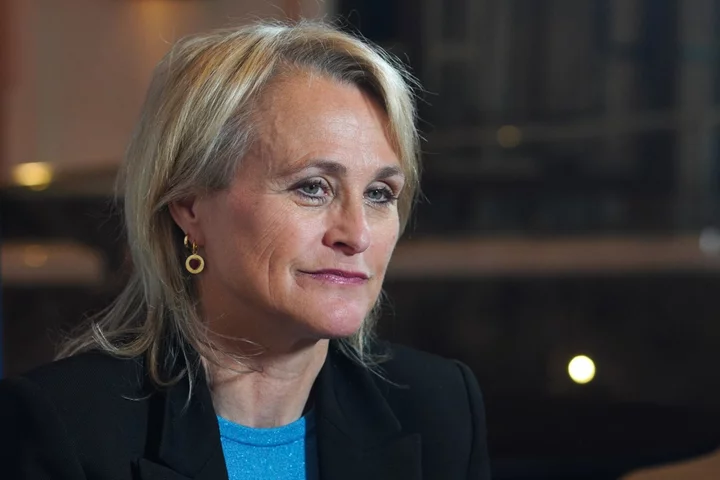
Amber Husain was cooking dinner for a friend when she suddenly realised the meat she was preparing was a corpse. She looked at the chicken in front of her and was overcome with a visceral sense of disgust. Instead of food, she saw “a carcass – plucked, beheaded, and fleshy”. Husain was 26 when she had this epiphany, and it served as a wake-up call not just for her stomach but her mind, too – as her personal tastes shifted away from meat products, her political outlook on the meat industry and food production more broadly also altered and expanded. Five years later, that moment of revulsion forms the opening of her new book, Meat Love, in which she scrutinises the idea of “ethical” meat consumption, and dares to ask how the contemporary middle classes have come to criticise “the worst violence against animals” while still happily feeding on their flesh. Why, for example, has well-heeled, middle-class London gone nuts for slurping bone marrow from the shin bones of baby cows? Why is offal on so many trendy menus? How has contemporary culture at large come to accept that factory farms are monstrous, but that if animals are cared for, cherished and loved while alive, we should feel better about killing them for our carnivorous pleasures? “For ages, I was one of those carnivores who felt mildly bad about eating meat but just turned that into this inane, self-consciously sadistic part of the pleasure of it all,” Husein tells me. “The more my diet started to revolve around stuff that wasn’t meat, the weirder meat started to feel. Interestingly, once my stomach had been radicalised, I found I had a much greater intellectual openness to thinking about the politics of meat.” Having freed herself from the conflict of eating meat but also feeling bad about it, she found she was able to go beyond those questions of morality – which she suggests can be “stifling” – and think politically. “Now that I have no desire to eat animals, there’s nothing to stop me reckoning with what it means that the meat industry [consists of] an underclass of both humans and animals who are exploited and – in the animals’ case – killed for pleasure and profit.” This is the essential crux of Husain’s argument, and it’s something often lacking in discussions around the “ethics” of meat consumption. For Husain, the question is not, “how can humans eat meat responsibly?” but “how are certain lives devalued to an extent that their suffering can be written off, in order to ‘make a killing’?” What she’s saying, in other words, is that whether the meat on the table has come from a factory farm or an organic farm, or whether you’re tucking in at Burger King or the River Cafe, the path to the plate is still paved with violence. And, while current cultural trends may claim it is better to love and respect an animal before killing and consuming it, perhaps what this cultivates is the ability to embrace exploitation “in a spirit of virtuous indulgence”. What does it really mean, for all living beings, if love is imagined as compatible with killing? “To slide your buttery hand between the flesh and skin of a thing that, if only for a moment, you have re-learnt to perceive as a corpse, is to give an invigorating massage to your sense of political possibility,” Husain writes in Meat Love. By the slim book’s end, her invigorated “sense of political possibility” has led to “a ravenous hunger – a desire for a different culture, a different society”; a new world “in which no one, neither animal, immigrant, worker, woman, or peasant, was considered a thing to be owned, controlled, killed, or left to die”. For many, the leap from a chicken breast on a plate to the exploitation of oppressed people around the globe might seem like a vast one. Yet, it certainly seems clear that there has been a marked shift in the way meat is conceived and consumed – among the middle classes, at least. Since the turn of the millennium, foodie figures like Hugh Fearnley-Whittingstall have been promoting “seasonal, ethically produced food” as part of a broader commitment to caring for the environment. At the same time, a distinctly carnivorous spirit has taken hold – one that professes to be an “honest”, “grounded” and “down to earth” ethos. “Good food, good eating, is all about blood and organs, cruelty and decay,” Anthony Bourdain wrote at the start of the 1999 New Yorker article that would, eventually, catapult him into global foodie fame. I find it easy to laugh at Hugh Fearnley-Whittingstall and people like that, but I’m not totally convinced that they’re really the bad guys Lewis Bassett Then there’s Fergus Henderson and St John – the illustrious London restaurant, born in 1994 on the premises of a former bacon smokehouse, which popularised “nose to tail” dining. This offal-centric “no waste” approach is neatly summed up in Henderson’s oft-quoted phrase: “If you’re going to kill the animal, it seems only polite to use the whole thing.” Traditionally “cheap cuts” are “elevated” from a source of sustenance for the working classes, to a source of virtue for the urban bourgeois. According to its own cookbook, St John dishes combine “high sophistication with peasant roughness” – that winning aesthetic formula that also sees middle-class urbanites flocking to farmers’ markets and chugging natural wine. In a sharp and searing piece for food and culture newsletter Vittles, writer Sheena Patel dubs this “Rich Person Peasantcore”, asking: “Why are these influencers pretending that they themselves till the land and eat like 17th-century French peasants when in fact their chopping boards cost more than most people’s rent?” In the face of swathes of small plates adorned with offal, and slices of ham served for upwards of £20, it seems like a pertinent question not just for influencers, but also for today’s trendiest restaurateurs and diners. Lewis Bassett is a chef and the host of The Full English podcast, which, over its two seasons, has dived into everything from the birth of “modern European” cuisine to high food prices, factory farms, and why Britain is in love with Greggs. “It’s interesting the way we create these fantastical worlds for us to eat within,” he says. “It is clearly a fantasy to imagine that you can have the rural experience of a peasant in France or Italy, in modern-day Britain.” Yet, he also says that this trend is far from new. The current “rustic” style – typified by “nose to tail eating” – is, he suggests, “intimately tied with what you could call a culinary and broader cultural movement that appears in the wake of countercultural movements in the Sixties, and eventually finds its way into food, especially as some of those countercultural people get a bit older and a bit more affluence”. Essentially, “it’s the same thing that manifested in places like Habitat,” he says, of the homewares and furnishings brand founded in 1964 by Terence Conran. Both design and dining were transformed, offering experiences to the middle classes that were both refined and casual at the same time. Alongside that cultural shift, and “that fashion for pared-down forms of eating out”, Bassett notes the arrival of a broader awareness of environmental and animal welfare concerns. “It’s obviously easy to ridicule these middle-class forms of culture,” he says, “but these concerns are ones I certainly share and I think should be considerations for everyone. I find it easy to laugh at Hugh Fearnley-Whittingstall and people like that, but I’m not totally convinced that they’re really the bad guys.” So is there a danger that legitimate backlash to the “thrifty rural”, “nose to tail” trend – and bourgeois “peasantcore” more broadly – could spill over into an attack on all food industry attempts at sustainability? “I think people don’t want stuffy fine dining experiences,” Bassett says, “but at the same time, having the kind of pared-down, rustic, ‘peasant food’ – like, having ham served to you at St John costs you 20 quid – maybe people are slightly sick of that.” He quickly adds, though, that he is “not saying it can come any cheaper than 20 quid, because when you spend a lot of time and effort rearing animals properly, and paying chefs properly, and paying rents in your restaurants, that racks up”. It seems there is a tension, then, between practical and immediate ethical matters – such as paying food industry staff liveable wages or reducing food waste – and broader questions about what kind of society we wish to live in or create. Is the question of “ethical” meat consumption, as Husain suggested, “beyond morality” – a question of politics only? Or is it still, at heart, a moral dilemma, based on people’s personal sense of “right” and “wrong”? Summing up Husain’s attitude towards animals in Meat Love, Bassett suggests “she’s saying that, if you love them so much, why are you killing them? I suppose where Amber Husain and I would slightly disagree is that I’m not convinced that killing an animal is inherently wrong.” Away from the carnal appreciation and “peasantcore” of contemporary restaurant culture, meat-eating often seems to be conceived as either a “guilty pleasure” or a “grim necessity”. In all these cases, however, there appears to be an overriding sense that there is “no alternative” to a meat-eating status quo. The late cultural critic Mark Fisher famously used similar terms to define “capitalist realism”, meaning that capitalism is the only viable economic system, and thus there can be no imaginable alternative. Is it possible we’re also stuck in a kind of “carnivorous realism”? If so, it might be because the two are so interlinked. As Husain puts it, “meat is the inevitable outcome of an economic system that relies on cheap labour and cheap life. But that doesn’t mean meat is a necessity, it means a new economic order is a necessity.” Perhaps taking the leap from a vegetarian diet to full-scale social and economic revolution still seems unthinkable to many. But, in nasty, brutish and austere times, it has also perhaps never been more necessary to seriously consider who can eat, and who is made meat. “I think we need an avalanche of political will from within the food justice, land justice, climate justice and labour movements to radically transform society,” Husain says. With that as the goal, she believes it isn’t helpful “for us to be clinging to the idea of meat as a pleasure”: “If we can’t imagine something other than animal flesh to eat for dinner we might struggle to imagine an entirely different society.” ‘Meat Love: An Ideology of the Flesh’ by Amber Husain is out now Read More Between Brexit and Covid, London’s food scene has become a dog’s dinner – can it be saved? It’s time for booze bottles to have health warning labels Should I give up Diet Coke? With aspartame under suspicion, an addict speaks Food portion sizes on packaging are ‘unrealistic and confusing’, says Which? In Horto: Hearty, outdoorsy fare in a secret London Bridge garden Zero-fuss cooking: BBQ pork ribs and zingy Asian slaw
2023-07-30 13:58
Who is Christy Turlington's daughter? OG supermodel reveals why she took a step back from modeling
Christy Turlington's daughter Grace Burns, 19, made her Milan Fashion Week debut on September 20
2023-09-22 15:15
F1 Abu Dhabi Grand Prix LIVE: Qualifying updates and times at Yas Marina
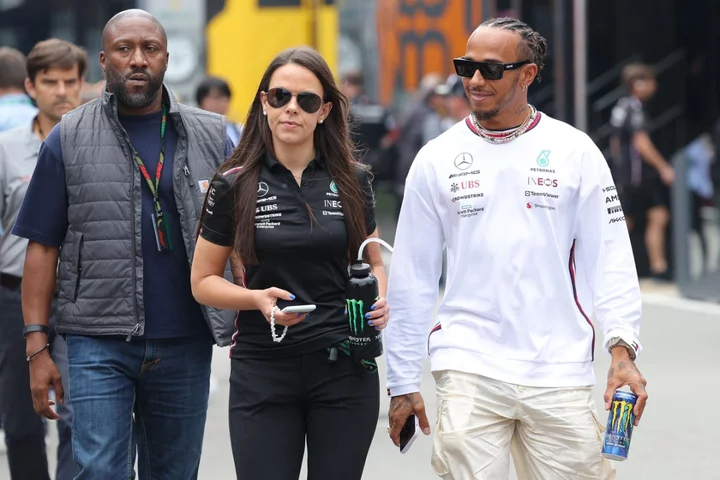
F1 returns to Abu Dhabi this weekend for the usual season-finale at the Yas Marina Circuit. Max Verstappen won the inaugural Las Vegas Grand Prix last week for his 18th victory of a record-breaking season. The Dutchman has now won six races in a row since Carlos Sainz’s victory in Singapore in September. Charles Leclerc finished second in Vegas after a terrific last-lap overtake on Sergio Perez, who despite dropping down to third place still sealed second in the world championship for Red Bull’s first-ever one-two finish in a Formula 1 season. Lewis Hamilton is still chasing his first win in nearly two years as Mercedes look to stave off Ferrari in the battle for second place in the constructors’ championship. Toto Wolff’s team are four points clear ahead of the final grand prix of the season. Follow live updates from the Abu Dhabi Grand Prix with The Independent Read More Lewis Hamilton takes aim at Christian Horner: ‘He’s stirring things!’ Lewis Hamilton and Max Verstappen to miss first practice in Abu Dhabi Mick Schumacher returns to racing with Alpine in 2024
2023-11-25 17:52
Is India exporting food inflation to the world?
India is keeping domestic food prices in check with export bans - but what does this mean for the world?
2023-08-31 06:17
DeSantis won’t rule out national abortion ban but suggests there’s no ‘mileage’ left in Congress
Ron DeSantis has not ruled out enacting a national abortion “ban” if elected president, after the Florida governor implemented state restrictions on abortion access at 15 weeks and six weeks of pregnancy within the last two years. But he suggested that there is no “consensus” in the US for members of Congress to implement a national ban, as abortion restrictions and the US Supreme Court’s decision to overturn Roe v Wade remain overwhelmingly unpopular. Asked by NBC’s Dasha Burns whether he would “veto any sort of federal bill” that would institute a nationwide ban, Mr DeSantis replied: “We will be a pro-life president and we will support pro-life policies.” In the wake of the Supreme Court’s decision to revoke a constitutional right to abortion care last year, Republican officials have repeatedly stated that the ruling merely left it up to individual states to decide. But anti-abortion lawmakers at the state level and in Congress continue to push for national restrictions that would also strike down state laws that protect and expand abortion access. Congressional Republicans have already passed several anti-abortion measures with national implications and have signalled the GOP’s readiness to ban abortion at certain gestational limits. President Joe Biden has promised to veto any such legislation, if it made it through Congress. In media appearances throughout his campaign, the governor has not directly answered whether he would support or veto legislation that would enact national abortion restrictions, suggesting that the issue should come from the “bottom up” with individual states determining policy. His statements have drawn criticism from influential anti-abortion group Susan B Anthony Pro-Life America, which called the governor’s position “unacceptable” to anti-abortion voters. Meanwhile, his campaign’s top donor has threatened to stop funding the candidate over his “extreme” position on abortion. And Donald Trump, who has taken credit for the Supreme Court’s decision in Dobbs v Jackson Women’s Health Organization, has suggested that his rival for the 2024 Republican nomination for president has gone too far with a state law that bans abortion at six weeks of pregnancy, signed into law just one year after a 15-week limit was put in place. “Dobbs returned it to the political branches. I think the reality is that that basically means the states are going to have primary control over it,” Mr DeSantis told NBC. “You know, I do think the federal government would have an interest in, say, preventing post-birth abortions or things that are really horrific, but I don’t think that there’s enough consensus in the country to see a lot of mileage in Congress,” he added. There is no such thing as a “post-birth” abortion; killing an infant after birth is illegal in all states, and pregnancies resulting in the death of the fetus in the third trimester are exceedingly rare, and largely involve fetal anomalies and life-threatening medical emergencies. The vast majority of abortions take place within the first trimester, while roughly 1 per cent occur after 21 weeks, according to the US Centers for Disease Control and Prevention. The governor also suggested that Democratic officials support “infanticide”, echoing his remarks in a recent CNN interview claiming that “liberal state” allow “post-birth” abortion. “I would not allow what a lot of the left wants to do, which is to override pro-life protections throughout the country all the way up really to the moment of birth in some instances, which I think is infanticide,” he told NBC News. Ms Burns interrupted Mr DeSantis: “That’s a misrepresentation of what’s happening.” The governor also said that he does not support penalties for people who seek abortions. “Not at all,” he told Ms Burns. “No, I don’t think this is an issue about the woman. I think a lot of these women, you know, are in very difficult circumstances. They don’t get any support from a lot of the fathers. And a lot of them, the number one reason why women choose to have an abortion is because they’re not getting support and they feel abandoned. Now, in Florida we’ve provided support and we’ve put our money where our mouth is, but at the end of the day, you know, I would not support any penalties on a woman.” Mr DeSantis also told NBC that he does not support limits on contraception access. “And I think it should be available over-the-counter, and I think people should be able to have access to it,” he added. Read More Texas judge sides with women after harrowing testimony over anti-abortion law Alabama health care providers sue over threat of prosecution for abortion help ‘Walmart Melania’, ‘America’s Karen’ or ‘Tacky Onassis’: Why Casey DeSantis matters to the 2024 race Senator who once worked at a Planned Parenthood warns that Republicans are planning a national abortion ban
2023-08-08 00:47
Google Pixel 7a deals: The best offers on Google's new budget smartphone
Google's budget smartphone line is (maybe, possibly) going out with a bang. Announced at the
2023-05-11 04:18
Angelina Jolie announces surprise business venture
Angelica Jolie has announced her foray into the fashion world with the launch of her new business venture called Atelier Jolie. Branded as a “creative collective for self-expression”, the 47-year-old Girl, Interrupted actor is approaching the fashion industry with a focus on the consumer. Under the rather vague model, the consumer will be invited to play the role of the designer and collaborate with tailors, pattern makers and artisans to create unique fashion statements. “Why simply buy the design of another person, when you can create yourself?” Jolie wrote on her personal Instagram page, announcing the launch of the new account @atelierjolieofficial. “We can all collect, appreciate and be influenced by the designs of others. But the highest form of self-expression — and I believe the most fun — is to create for ourselves,” she wrote in the manifesto for the new venture. The Mr & Mrs Smith actor said she wants to help “democratise the fashion industry” by allowing customers to have access to a collective of emerging designers. She added that Atelier Jolie will only use “quality vintage” and “deadstock” – leftover – material. Jolie also revealed the brand’s logo designed by Peter Miles, an art director who has collaborated with Celine, Gabriela Hearst and Repossi. The logo shows white text reading the brand name, printed over a brown rustic fabric. The mission statement continued: “You will be able to repair or upcycle a piece from your closet you wish to revive, perfecting fit, breathing new life into what could have been thrown away, and creating quality heirloom garments with personal meaning.” Jolie provided little clarity on the specifics of the business’s operation, or even launch date, asking fans to “bear with me”. “We hope to create a community of creativity and inspiration, regardless of socio-economic background,” she wrote. Jolie also alluded to her long-term interest in fashion. “Fashion is an art I’ve had the opportunity to play with over the years. I’ve designed clothes, and learned about shapes with many of the best tailors,” she continued. “Designers often sketch or approve designs, but it is the tailors who make the difference and who I truly love creating with. And yet, these makers rarely receive the credit and respect they deserve. This isn’t the first time Jolie has started a business venture. The Maleficent actor founded a French winery and began selling her own rosé, Chateau Miraval, with her then-husband Brad Pitt. In 2021, however, Jolie sold her portion of the business. Read More Everything we know about ‘near catastrophic’ Harry and Meghan paparazzi chase in New York Fans aghast after Kanye West’s ‘wife’ Bianca Censori wears cross-shaped body tape Harry and Meghan – latest: Paparazzi blame car chase on couple’s ‘reckless’ driver Angelina Jolie shares tribute to late mum and urges women with family cancer history to get checked Fans aghast after Kanye West’s ‘wife’ Bianca Censori wears cross-shaped body tape 5 of this summer’s hottest swimwear trends
2023-05-19 00:21
What to know about the 2023 Westminster Dog Show
The Westminster Kennel Club Dog Show will name its winner on Tuesday. Read on for more about where to watch it, how the dogs are judged and which dogs are in the running for best in show.
2023-05-09 02:48
M3 iMac vs. M1 iMac: What are the differences?
This M3 iMac vs. the M1 iMac face-off is absolutely necessary because, let's be honest,
2023-11-02 03:20
Dunkin' is releasing boozy versions of their iced coffees and teas
It's true: Dunkin' is turning two of its most popular drinks into boozy beverages.
2023-08-14 20:26
Record Voter Turnout Predicted When Thais Vote on Sunday
A record number of Thais are projected to go to the ballot boxes in Sunday’s parliamentary election as
2023-05-13 12:45
I Entered My Boring Outfits Era — Why You Should, Too
There was a time in my life when wearing a pair of athletic sneakers, a T-shirt, and jeans to even run errands was unimaginable to me. But these days it’s my Saturday uniform. Since leaving New York City for suburban New Jersey earlier this year, I’ve entered what I am dubbing “my boring outfits era.”
2023-08-24 05:56
You Might Like...
'The Idol's finale twist makes absolutely zero sense
Five Key Charts to Watch in Global Commodities This Week
Shein partners with Forever 21 in fast-fashion deal that will expand reach of both companies
A Version of Pickleball Is Taking Off in Venezuela — to Maduro’s Dismay
Score up to 80% off hundreds of games during Xbox's Deals Unlocked event
3 ways to pay for your summer vacation
Abandoned Russian Superyacht to Be Auctioned After Sanctions Lifted
Can Apple make us love virtual reality? | You Ask The Questions