

Netflix's password crackdown leads to massive subscription spike
Ever since Netflix announced it would start cracking down on password sharing, the movie streaming
2023-06-10 01:21

'The Witcher' Season 3's weapons are full of hidden clues
Despite appearances, a sword isn't a sword isn't a sword in The Witcher. Season 3
2023-07-05 21:57

Lisa Rinna shares husband Harry Hamlin's photos as he poses in their backyard, fans say 'he's just getting hotter'
Lisa Rinna's husband Harry Hamlin looked stylish in a photoshoot for Vingt Sept Magazine
2023-06-30 09:16

King Charles visits Kenya as colonial past looms large
King Charles III begins a state visit to Kenya on Tuesday, where he will be confronted by widespread calls for an apology...
2023-10-31 11:56
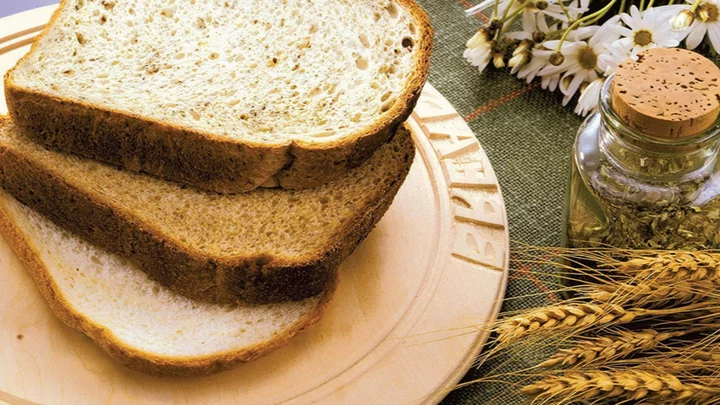
The best bread makers for home baking
Are you a Bake-Off contestant in waiting? You really don’t need to be a budding
2023-07-31 17:54

Fed up with catching colds? Here’s what your doctor really wants you to know
Already feel like you’ve had your fill of sore throats, coughs and stuffy heads this winter? Colds may be common and minor – but they can still leave you feeling rotten, not to mention being a major inconvenience. They aren’t really something you want to be traipsing to the GP surgery with either – but wouldn’t it be helpful to know what your doctor really thinks about managing winter ailments? We asked them… Getting ill is not always terrible Nobody enjoys having a cold, of course. But GP and TV medic Dr Hilary Jones – known for regular appearances on Good Morning Britain – says we can’t always “prevent exposure to viruses, especially in winter when people flock together for warmth indoors”. And if symptoms are mild, we probably don’t need to worry too much. “Let your own immune system deal with it,” says Jones. “That’s what your immune system is for – and looking on the positive side, the more you tickle up your immune system, the healthier it is. In a way, you’re stimulating your immune system to be healthy.” Antibiotics can be harmful if you don’t actually need them If symptoms are proving tougher to tolerate, it can be tempting to try antibiotics. But while there are certainly times when antibiotics are vital, they only work for bacterial infections, so taking them when you have a viral infection (such as a cold) is not only futile, but could cause harm. “Often, both clinicians and patients will be tempted to try antibiotics, even when there is little-to-no chance of them helping – ‘just in case’ and often accompanied with the reasoning of ‘what harm can it do?’,” says Dr Tom Jenkins, GP and developer of Centoreze Pelargonium. “We are now beginning to appreciate that there is potential harm at an individual level,” Jenkins adds. “There are more bacterial cells in the human body than human cells, and most of those bacterial cells are helpful and essential for healthy functioning. Because antibiotics are not selective and do not single out just bad bacteria, taking them upsets our bacterial microbiome, and we are now starting to learn about the subtle and sometimes lasting consequences of this.” Another major concern is bacteria becoming resistant to antibiotics – which the World Health Organisation (WHO) describes as one of the biggest threats to global health today. Tackling this is complex, but on an individual level, WHO guidelines suggest people only use antibiotics when suitable. Soothing home remedies are worth it Jones, who is working with Manuka Doctor, also points out: “If you do get sick, comforting symptomatic relief is really important, starting with the simple things. I’m an advocate of manuka honey – the genuine manuka honey from New Zealand, which carries a number for the antibacterial activity, the MGO methylglyoxal.” As well as its antibacterial properties, Jones says it’s “soothing for throats” and can provide an “energy boost” – plus his 97-year-old mother is a fan. “Not only does she put it in her porridge, she put it on her skin for a few lesions that she has – perfectly well-endorsed by the district nurse who comes to visit her as well. “You can also put honey in a grog, in hot water, with a bit of lemon, a bit of cinnamon – that’s something our grandmothers used to use, and to good effect.” The herbal remedy that’s doctor-approved There are so many natural remedies out there promising to fight off symptoms, and deciding between them can be overwhelming. But did you know there’s one herbal remedy that is recommended by the National Institute of Clinical Excellence (NICE) for managing certain upper respiratory tract symptoms? Pelargonium, licenced as a Traditional Herbal Remedy, is recommended by GPs to consider as one of four self-care treatment options for adults and children aged 12 and above. It’s mentioned on the NHS website’s page for coughs, too – along with getting plenty of rest, staying hydrated, Paracetamol and Ibuprofen where suitable for pain relief, and honey and lemon. Derived from plants found in South Africa and Lesotho, Pelargonium was widely used to help treat infections before antibiotics boomed. But “over the last quarter of a century”, Jenkins says , “clinical research has begun to revisit this forgotten treatment, especially in Germany, and now more recently here in the UK too.” This has “resulted in the publication of over 70 peer reviewed pre-clinical and clinical studies supporting its effect”, says Jenkins. He explains it contains “a large number of biological molecules” that work in a number of ways to “stimulate the body’s immune system to fight infections”. Diet and lifestyle do play a part “Diet is always important,” says Jones. “A healthy lifestyle does protect us and helps our immune system. Clearly there are obvious things not to do – smoking and excess alcohol – as well as poor nutrition. “We know vitamin D is important for good immune health, and there are many people who are deficient in vitamin D, who should be taking a supplement as recommended by the WHO and NHS, particularly through winter,” Jones adds (when there isn’t enough sunlight in this part of the world for our bodies to make sufficient amounts). “So vitamin D, adequate vitamin C, zinc, and sometimes things like garlic and echinacea can be helpful in making sure your immune system is healthy.” While a balanced diet comes first, Jones believes “it’s always worth considering a multivitamin, which gives you a little bit of everything, particularly if your diet is restricted or selective in any way or if you’ve got extra needs”, he adds. “But healthy eating, plenty of fruit and vegetables, adequate protein, exercising moderately and avoiding pollutants and cigarettes – those are the main things.” Check in with your doctor if you’re constantly rundown Still feel like nothing seems to help? Then it may be time to check in with your doctor. “If you’re concerned that you have any possible underlying medical problem, I would always advise discussing matters with your GP,” says Jenkins.“Sometimes recurrent infections can be a sign of an underlying infection, but sometimes they can be because you are rundown. Your GP is ideally placed here because they have your medical record, are able to look into things in more detail, and can follow you up.”
2023-11-22 17:46

Lula to get hip surgery, admits pain makes him cranky
Brazil's President Luiz Inacio Lula da Silva, 77, said Tuesday he would undergo hip surgery to relieve pain that was putting him...
2023-07-26 00:49

Knotty and nice: Jurgen Krauss’s homemade soft pretzel recipe
Pretzels, or brezel or brezen in German, are the most iconic German food. Ornaments of pretzels adorn every bakery, and images of them can be found on medieval church windows in Freiburg, where I come from,” says former contestant on The Great British Bake Off, Jurgen Krauss. “Often, a pretzel works better as a soother for an upset baby than a dummy. They are a part of my upbringing and heritage. And still, there is no better snack after a long shopping spree through my hometown of Freiburg than a brezel from the bakery at the tram stop. “Disclaimer about lye: I am giving two options for the finish. One is using lye, which involves a very dangerous chemical, solid sodium hydroxide. The other option uses baking soda, which is bicarbonate of soda, and is not dangerous at all. The results are different in colour and taste, but without a direct comparison, the bicarbonate of soda pretzel can stand its ground. If you intend to use lye, I’d recommend baking a few batches of pretzels with bicarbonate of soda, but treat it as if it was lye, to practise the handling and have everything in the right place before starting.” Soft pretzel Makes: 8-10 Ingredients: For the starter: 100g bread flour 2g salt 1⁄8 tsp instant yeast 65ml water For the dough: 400g bread flour 9g salt 20g honey 5g instant yeast 25g unsalted butter, room temperature 180ml water Coarse salt crystals, for sprinkling For the lye or bicarb dipping solution: 2L water 8g salt 80g bicarbonate of soda or 80g sodium hydroxide pellets Method: 1. Prepare the starter the day before baking. Combine all the ingredients in a bowl and mix with your hand or a spatula until all the flour is incorporated. Cover with clingfilm and leave to stand at room temperature for about two hours. Then put the starter in the fridge overnight until you need it – it will be good to use for up to three days. 2. About one hour before making the main dough, take the starter out of the fridge. 3. To make the main dough, combine all the ingredients except the salt crystals and the starter in a bowl and mix with your hand or a spatula. The resulting dough will be very stiff. Knead the dough on a work surface for about 10 minutes. Don’t use any additional flour, you won’t need it anyway. The resulting dough should be smooth and a bit elastic. Put the dough into a bowl, cover and prove at room temperature for about two hours. Fold the dough once after one hour. 4. Meanwhile, prepare the dipping solution. Use a big stainless-steel pan and stainless-steel spoons for dipping. Cover your normal work surfaces in case the lye spills. When dipping, keep the baking sheets very close to the lye pan and the oven. Always wear protective gloves and goggles when working with sodium hydroxide and lye. Never ever touch sodium hydroxide pellets with your skin. 5. If using bicarbonate of soda, bring the water to boil. Switch off the heat, add the salt and stir. Then add the bicarbonate of soda – there will be a bit of frothing and splashing, so be careful. Leave to cool. 6. If using sodium hydroxide, put the water in the pan and then add the sodium hydroxide pellets. Sodium hydroxide creates a lot of heat when it dissolves. 7. Once the dough has proved, divide it into pieces weighing 85 grams each. Roll each piece of dough into a cylinder. Once all the pieces have been rolled, start again with the first piece, to roll it into a long strand with thin ends and a belly in the middle. Aim for a length of 60 centimetres. Make sure you don’t tear your strands – if there is too much resistance in the dough, move on to the next strand. You will need several cycles to reach the length required. 8. Now shape the pretzels – the bakers use a slinging method, but there is a simpler, slower way to do this. Make sure the ends of the little arms are well attached to the middle bit. 9. Place the pretzels onto lined baking trays, cover and leave to prove at room temperature for about 45 minutes. Uncover the pretzels and put them in the fridge for 30 minutes, so that a skin can form. Preheat the oven to 230C fan/gas mark 9. 10. Take the pretzels out of the fridge. Dip each pretzel in lye or sodium carbonate solution for about five seconds. Transfer the pretzel back onto the lined baking sheet. One sheet will hold four to five pretzels. Once the sheet is full, slash the thickest part of the pretzels with a sharp serrated knife and sprinkle with salt crystals. Transfer to the oven immediately and bake for 12–15 minutes. Leave to cool on a wire rack. Repeat with the remaining pretzels. 11. Because of the salt, these pretzels are best eaten fresh. ‘German Baking: Cakes, Tarts, Traybakes And Breads From The Black Forest And Beyond’ by Jurgen Krauss (published by Kyle Books on 31 August, £26). Read More The dish that defines me: Evelin Eros’s rum cake ‘It started with a radish’: Chef Simon Rogan reflects on restaurant L’Enclume at 20 The true story – and murky history – of Portuguese piri piri oil ‘My depression stopped me doing what I loved most in life – cooking’ What Bake Off’s Jurgen Krauss really thinks of his shock elimination How to pull off a traditional German babka chocolate braid
2023-08-30 13:47

Thai Coalition on Course to Form Government, PM Candidate Says
A coalition of Thai pro-democracy parties, which swept Sunday’s election, is on course to form the next government,
2023-05-18 13:29

Treat your skin to self-care with this EMS device, now $55
TL;DR: As of September 17, get the VYSN IntelliPen EMS Electric Vibrating Heated Mini Face
2023-09-17 17:18

Sick workers tied to 40% of restaurant food poisoning outbreaks, CDC says
Federal health officials say people who worked with food while sick or contagious were linked to about 40% of food poisoning outbreaks from restaurants with a known cause between 2017 and 2019
2023-05-31 01:17

Heat, War and Export Bans: Global Food Threats Are On the Rise
As scorching temperatures ravage farms from the US to China, crop harvests, fruit production and dairy output are
2023-07-22 15:57
You Might Like...

Here's why 'Shark Tank' Season 14 Episode 22 is not airing this week: Find out when ABC show will return

Satellite images show colossal damage from Ukraine's destroyed Kakhovka dam

Contaminated cider kills 16 in Russia

Men’s Health Week: How to talk about sensitive or ’embarrassing’ health issues

Google's Bard AI chatbot is vulnerable to use by hackers. So is ChatGPT.

Female students ‘more than twice as likely’ to be affected by poor mental health, research shows

French rapper MHD gets 12 years' jail for youth's murder

How to unblock U.S. Netflix from anywhere in the world