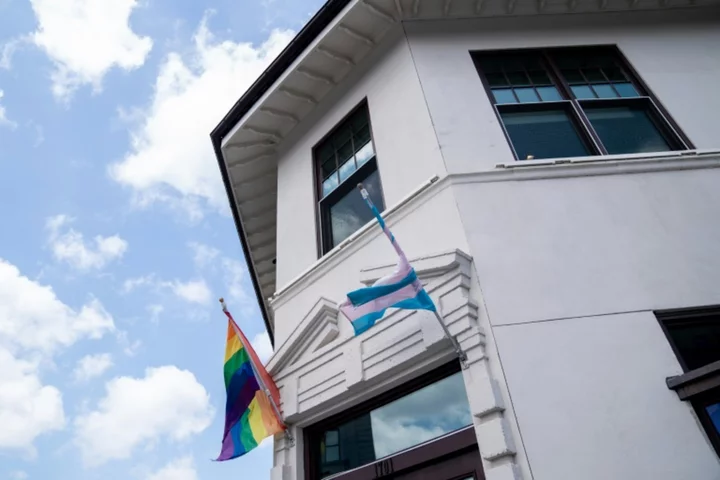
Inside a US abortion clinic director's post-Roe odyssey
As a first-year college student from the Minneapolis suburbs, Tammi Kromenaker was proudly anti-abortion, at one point slapping a "God is pro-life" bumper sticker...
2023-06-20 11:21
Chloe Bailey in tears after accidentally eating beef burger for the first time in 10 years
Chloe Bailey was left in distress after she recently accidentally ate a beef burger, interrupting 10 years of dedicated veganism. The Little Mermaid star, 25, and her younger sister Halle Bailey, 23, have both been vegans for the last decade and have been outspoken about their dietary choices. However, Chloe revealed in an Instagram Live stream that she was mistakenly served red meat instead of a plant-based Beyond Meat burger over the weekend, just before attending Beyoncé’s Renaissance World Tour concert in Atlanta, Georgia. According to Chloe, the incident occurred on Saturday (12 August) after she ordered burgers for her and Halle in the hotel they were staying in before the show. She told fans: “So I called to get a Beyond Burger for sis and I like usual. Specified that it’s vegan, no butter on the bun, nothing like that. “So we get the burgers, I’m getting out of the shower… and she’s eating the burger and she’s like, ‘Are you sure this is Beyond?’” Confident in her ordering, Chloe said it was. However, when she took a bite of the burger herself, she realised something was wrong. The “Do It” singer continued: “I touched the patty and smelled it and was like, ‘Of course it’s Beyond, yeah’. So I finish getting dressed, I take a bite and the juice dripping from the burger is not like a Beyond burger. I just knew it was not a fake burger. “The one bite I took and I just knew. Immediately I said, ‘This doesn’t feel right’.” She quickly rang the hotel’s front desk to ask if they delivered vegan burgers to her hotel room. However, the concierge’s answer horrified her. “He said, ‘No, they’re brand burgers’. I said, ‘Brand burgers? I said Beyond burgers’. I don’t even know what a brand burger is,” she told fans on the livestream. “Immediately I’m losing my s***. I gobbled down a whole can of Sprite. Halle’s laughing at me because I’m crying. This is right before the concert yesterday. I’m crying, Halle’s just laughing so hard at me because I’m freaking out. “I’ve been vegan for 10 years. I have not consumed any red meat for 10 years,” Chloe added. The clip was shared on the celebrity news Instagram account The Shade Room, and prompted sympathy from other vegetarian and vegan fans. “I’m vegetarian and it’s definitely hard to tell the difference sometimes but you know the taste of real meat and that stomach ache ain’t no joke,” one person commented. Another said: “My first time eating meat after a full vegan diet, my stomach… revolted.” Halle said in a 2017 interview with Complex that the sisters went vegan because of their mother. She explained: “One day, she was like, ‘I’m gonna try to be vegetarian for a week. You can join me if you’d like’. We started the week with her and just never went back.” In an awkward red carpet exchange at the premiere of live-action remake of The Little Mermaid, Halle was asked who she would choose to eat between Flounder and Sebastian. In the film, Flounder is a fish and Sebastian is a crab. She responded: “I would not eat either of them. They’re my friends." Read More The millionaire smuggled out of Japan in a box: Was Nissan boss Carlos Ghosn a victim or a villain? Husband ‘ruins’ dinner because of his wife’s typo: ‘The worst kind of control freak’ Billy Porter hits out at Harry Styles and Anna Wintour over Vogue cover: ‘You’re using my community’ How sizzling kitchen drama The Bear is spicing up the dating game for chefs Mick Fleetwood says his Hawaii restaurant was ‘lost’ in devastating Maui wildfires Where to find the best Guinness in London – and how to spot a bad one
2023-08-14 20:25
Am I just tired or is it ME?
ME, or myalgic encephalomyelitis, is a serious, long-term chronic illness that impacts the sufferer, leaving them often suffering from extreme exhaustion. ME has for a long time been under-researched, but as awareness of the condition grows, more people are coming forward for help. As a grouping of symptoms, instead of a clearly identifiable illness, ME is very hard to diagnose and thus people can suffer for years before getting help for it. Symptoms can include exhaustion, digestive issues, muscle weakness, shortness of breath and irregular heart rate. But how do you know if you are suffering with ME, or are just really exhausted? Overlapping symptoms Covid has made ME more prevalent, but people still find it so difficult to know what may just be tiredness. “It is really difficult to tell the difference. ME and CFS (chronic fatigue syndrome) have a lot of overlap [with tiredness] and there have been a lot of issues with long covid with these long persisting post-viral malaise, where even if people sleep well, they may still feel exhausted,” says GP and men’s health specialist Dr Anand Patel. If you have had covid or another viral illness, this may increase the likelihood of having ME. Get checked out “If you have had persisting symptoms for more than a few weeks or they are really severe, speak to your GP,” says Patel. Particularly if “you are sleeping okay, your diet, caffeine and alcohol intake are okay, but your symptoms are persisting. They may check your thyroid and blood count”, he explains. “A quarter of our appointments these days are classed as ‘tired all the time’. It is very difficult to weed out what is what when ME and CFS are groups of symptoms that are bundled together. It is not necessarily something that will cause medical harm, but will cause really significant symptoms to sufferers,” says Patel. “With ME, you may be so tired you can barely stay awake in the day. We are still in the exploratory stage of what does cause it, but if you have had psychological trauma or illness it is more likely to be ME that has caused these prolonged symptoms. It can be hard to find things during tests and scans, but of course, there are conditions we don’t have tests for or are hard to identify,” he explains. Be clear of your symptoms “It is really difficult to diagnose something if you can’t find it, so a patient needs to explain symptoms and how they are feeling. Many people with it don’t feel seen, and a doctor may be struggling to find a specific answer,” Patel explains. Keeping a diary of symptoms may help to make it clear. Vitamin deficiencies Consider what the other causes may be. “Tiredness could be caused by blood count and anaemia, thyroid function and deficiencies, dietary changes and vitamin deficiencies,” says Patel. “If you have a varied diet, these are unlikely. B12 and folic acid deficiency are common, they make blood make new cells and are important in nerve function. Also, it could be vitamin D deficiency, a lot of people need to take a vitamin D tablet every day in the UK because we don’t get enough sun and slap on factor 50 as soon as it does come out,” Patel says. Read More Charity boss speaks out over ‘traumatic’ encounter with royal aide Ukraine war’s heaviest fight rages in east - follow live Dr Alex George: Five months of sobriety has made a ‘huge difference’ Everything you need to know about Sophie, the new Duchess of Edinburgh Beyonce kicks of Renaissance tour in string of glamorous outfits
2023-05-12 15:29
Hestan Establishes Kitchen Laboratory in Partnership with Johnson & Wales University
ANAHEIM, Calif.--(BUSINESS WIRE)--Aug 3, 2023--
2023-08-04 01:22
How to unblock websites and access restricted content
TL;DR: ExpressVPN is the best service for unblocking websites and accessing restricted content. A one-year
2023-08-09 12:19
Get an Amazon Fire TV Stick 4K for its lowest price yet with this last-minute Prime Day 2 deal
SAVE 54%: The Amazon Fire TV Stick 4K is still on sale post-Prime Day 2
2023-10-12 22:45
What is 'perpetual stew?' TikTok obsessed with chef's stew that never ends
TikTokers has been left baffled by a never-ending “perpetual stew” being made by a chef to feed hungry New Yorkers. On TikTok, food trends and recipes come and go, capturing people’s imaginations for a time before the next thing comes around. The latest to grab the spotlight is one woman who is making a never-ending dish called a perpetual stew. Perpetual stew is a popular recipe from the Medival times that is made by continuously simmering the stew while topping up the ingredients to keep it going. It is rarely, if ever, drained fully. Sign up to our free Indy100 weekly newsletter Because it is so often strained and skimmed, it leaves behind “only dark, rich broth” according to How Stuff Works, making it very tasty and good for you. TikToker Annie Rauwerda has grown a large following by documenting the process of making the 14th-century Polish stew. What does TikTok think of perpetual stew? Rauwerda shared her first post about starting the process of making perpetual stew on 11 June. In the video, she said: “I’ve always wanted to do it. I’m finally doing it. It’s perpetual stew summer.” She shared a screenshot from the Wikipedia entry for perpetual stew, which claimed that, if properly maintained, the stew can continue cooking for “decades or longer”. @depthsofwikipedia more medieval behavior! In the next video about the stew, Rauwerda invited people to her house and everyone had to bring an ingredient to add to the stew. The ingredients included garlic, carrots, parsley, potatoes, onions, chives, celery, fennel and rice. @depthsofwikipedia come get your random community juice!!!!!!!!!message me if you want to come to the next ones Rauwerda explained in another update that someone added dill to the stew and that it was overpowering the flavour, adding, “I can't wait until we’re done with this batch”. She also invited people who live near Bushwick in New York to come and have some stew or bring an ingredient to add to it to message her. @depthsofwikipedia girls just wanna have stew! Rauwerda began having stew parties outside to give the stew to New Yorkers who wanted to try it. In her most recent update, posted four days ago, she said the stew has now been cooking for 38 days. TikTokers have jumped fully on board with the perpetual stew, with some saying they now want to move to Brooklyn, New York to be part of it. One person commented: “I’m literally so proud of u for making this stew I absolutely love this!!!!!!” Another wrote: “I’m being 100 per cent for real when I say I’m thinking about moving to Bushwick from Chicago so that I can contribute to the Stew.” “I’m visiting NYC for the first time in December and the stew is on my itinerary lol,” another hopeful fan wrote. Someone else said: “I’m not in New York but tbh I’d buy perpetual stew merch.” Have your say in our news democracy. Click the upvote icon at the top of the page to help raise this article through the indy100 rankings.
2023-07-20 16:45
Kids can't keep their hands off these rad toys
Just like the full-grown adults who work here at Mashable, our staff’s little ones are
2023-09-25 23:28
Kermit Gosnell butchered women and babies for decades. The anti-abortion movement weaponised his horrors
Robyn Reid was just 15 years old when a doctor fought her down onto a table, ripped off her clothes, tied her arms and legs with restraints and forced her to undergo an abortion against her will. It was 31 January 1996, and the teenager had spent the last three months hiding her pregnancy from her grandparents as she prepared for a new life raising her baby. When they found out, Robyn’s grandmother had driven her from their home in New Jersey to a notorious west Philadelphia clinic nicknamed “Club Abortion”. “I was determined to keep the baby,” Robyn, now 40, tells The Independent. “My plan was to go to the doctor and refuse to have the abortion as I thought ‘no one can make me.’ My 15-year-old brain thought there wasn’t even a chance that would happen to me. “Inside the clinic, I remember being in the room and the doctor walked in and said: ‘Why aren’t you undressed?’ When I told him ‘I’m not having an abortion’, he shouted: ‘I don’t have time for this s***.’ “He then walked out of the room and came back in with my grandmother… Then he started pulling my clothes off.” Robyn, a small 90-pound teenager, fought with all her strength. “I was fighting him as he pulled my clothes off and held me down,” she says. “He was tying my arms down with straps and, then every time he tied my legs down, I managed to pull my arms free. It went on and on like that – it was a physical fight.” In the end, she could fight no more. “He overpowered me to the point that I could no longer move. I remember looking up at the light and saying to myself: ‘Just don’t go to sleep’. Then he gave me a needle,” she says. “The next thing I knew, I woke up 12 hours later and I was back home in New Jersey and was no longer pregnant.” Sobbing, she adds: “I’ll never forget that day.” It would be years before Robyn would learn that she was one of countless women given illegal or dangerous abortions at the hands of a man who some would describe as a “butcher of women”, others as “one of America’s biggest serial killers”. More than 14 years passed before the truth of Kermit Gosnell’s “house of horrors” was finally exposed to the world. ‘House of horrors’ On 18 February 2010, the FBI carried out a raid on the Women’s Medical Society on Lancaster Avenue, west Philadelphia, as part of an investigation into the illegal sale of prescription drugs. On entering the clinic, the federal agents had no idea of the extent of the horrors they would find inside. Semi-conscious and heavily-sedated women lay on dirty recliners and bloodstained blankets moaning in pain. A mix of blood and cat feces covered the floors – the latter from the flea-ridden animals roaming the space where women were undergoing medical procedures. Jars up jars of severed baby feet were stacked inside the refrigerators. By the end of the search, authorities had found 47 aborted fetuses and infants stored at the facility – including one late-term infant frozen inside a water bottle. The dangerous conditions and unspeakable scenes were only the start. In the four decades prior, Gosnell had been running his “house of horrors” clinic in a deprived neighbourhood in west Philadelphia. It was a place where poor, migrant, minority ethnic, and vulnerable women could pay cash to have late-term abortions well after Pennsylvania’s legal limit of 24 weeks. A place for women who – due to poverty, lack of healthcare and other factors driven by inequality – ultimately had nowhere else to turn. Or for women and young girls like Robyn who had their right to choose taken away from them with no questions asked. In many cases, it wasn’t even an abortion clinic - but rather an infanticide clinic where babies were delivered at near-full term and then murdered. While Robyn’s forced abortion was within the legal timeframe in the state of Pennsylvania, countless other women underwent the procedure at Gosnell’s clinic in the seventh, eighth and even ninth month of pregnancy. These babies were delivered alive at full term, breathing and moving. It was then that Gosnell – and sometimes colleagues who had zero medical training – carried out what he called “ensuring fetal demise” by a procedure he named “snipping”. This “procedure” involved sticking a pair of scissors into the back of the newborn baby’s neck and cutting the spinal cord, severing the brain from the body. It was murder. As the 2011 grand jury report investigating Gosnell’s actions states: “This case is about a doctor who killed babies and endangered women. What we mean is that he regularly and illegally delivered live, viable babies in the third trimester of pregnancy – and then murdered these newborns by severing their spinal cords with scissors. “The medical practice by which he carried out this business was a filthy fraud in which he overdosed his patients with dangerous drugs, spread venereal disease among them with infected instruments, perforated their wombs and bowels – and, on at least two occasions, caused their deaths.” And for years and years, Gosnell got away with it. ‘Butcher of women’ It’s impossible to know exactly how many babies or women died at Gosnell’s hands. Baby Boy A – as he was referred to in the grand jury report and at trial – was around six pounds when Gosnell induced the labour of his 17-year-old mother at 30 weeks of pregnancy and he was born breathing and moving. Gosnell “snipped” the baby’s spine and dumped him in a shoe box, joking that the baby was so big that he could “walk me to the bus stop”. Baby Boy B was at least in week 28 of pregnancy when he was aborted and his body placed in a one-gallon spring-water bottle and frozen. Baby C lived and breathed for about 20 minutes before one of Gosnell’s workers “snipped” their neck. Baby D was born in a toilet and was moving when they was killed. At least two women are also known to have died. The first woman, Semika Shaw, died of sepsis in 2002 after Gosnell botched the abortion procedure and perforated her uterus. She was 22. The second fatality was Karnamaya Mongar, a 41-year-old refugee from Bhutan who had recently arrived in the US from a resettlement camp and gone to the clinic for an abortion in 2009. She was given an unrecorded amount of the dangerous – but cheap – sedative Demarol. When she stopped breathing, there was no working defibrillator to try to get her heart working again. Instead of immediately calling 911 and performing life-saving measures on Mongar, clinic staff tried to cover up what was happening by staging the scene to appear as though she had been undergoing a safe, legal procedure. By the time she got proper medical attention, it was too late. Her cause of death was found to be an overdose of sedatives. On 15 May 2013 – three years after the FBI raid – Gosnell was finally convicted over some of the deaths and horrifying goings-on at his clinic. He was found guilty of three counts of first-degree murder in the deaths of Babies A, C and D, involuntary manslaughter in Mongar’s death, 24 counts of performing an abortion beyond the 24-week limit and numerous other charges. He is currently serving three life sentences behind bars in State Correctional Institution Huntingdon. Eight other clinic workers including Gosnell’s wife were also convicted on various charges – some of them of murder. Battle over reproductive rights There’s no doubt that the case of Kermit Gosnell is a real life horror story. But, it’s also a key chapter in the wider story of America’s battle over reproductive rights. For anti-abortion activists, groups and politicians, the case became one of their strongest weapons to push for abortion bans, shorter term limits and tighter restrictions on abortion clinics. Following his arrest, the name Gosnell instantly became fodder for the right to argue that tougher laws and fewer abortion rights was what the country needed. When he introduced a resolution calling for Congress to investigate abortion clinics in 2013, Republican Senator Mike Lee called Gosnell’s case a “wake-up call” for the nation. Texas Governor Rick Perry meanwhile described Gosnell’s case as “the awakening of a sleeping giant in this country to protect babies”. And in many cases, the rhetoric appeared to work. By the time Gosnell was convicted in May 2013, stricter abortion laws had already been rolled out in several states, with Arkansas banning most abortions after 12 weeks and North Dakota after six. Tougher laws were also making their ways through the legislatures of other states including North Carolina, Texas, Wisconsin and Ohio. What Gosnell’s case had done was give the anti-abortion movement “credibility” in its efforts to “demonise” abortion doctors, clinics and – ultimately – abortion rights altogether, says Mary Ziegler, UC Davis Martin Luther King Jr Professor of Law and an expert in the politics of reproduction and healthcare in the US. “His case lent credibility to the anti-abortion arguments of the era,” she tells The Independent. “It wasn’t the case that what he did changed how anti-abortion groups were arguing… Before this case, they were already trying to demonise anti-abortion doctors. But until then, it had been easier to dismiss what they were saying as a political strategy.” For years, the anti-abortion movement had framed abortion as murder and pro-choice advocates as people who supported “killing babies”, despite late-term abortions already being illegal. In Gosnell, the anti-abortion movement for the first time had a real-life figure that they could point to as an example to support this argument. “Kermit Gosnell made it easy for anti-abortion groups to push this narrative,” says Professor Ziegler. “After Kermit Gosnell was discovered, these anti-abortion groups said ‘this is representative of what all abortion doctors are like and of what abortion in general is like’. “Which of course wasn’t true but it made it easier for them to demonise abortion providers more than in the past as they now had a prominent example. This was no longer hypothetical. “So it was framed that, in order to prevent Kermit Gosnell from happening again there was a need to shut down abortion and abortion clinics. The idea that the next Kermit Gosnell could be out there lent credibility to this argument.” She adds: “The movement needed villains to tell the story and in modern history he was the most famous.” The clinic itself became and continues to be used as a physical reminder of the horrors of what went on inside. Indeed in 2019, anti-abortion groups sought to buy the clinic on Lancaster Avenue and turn it into a crisis pregnancy centre, reported local outlet WHYY. The efforts appear to have stalled as four years later the looming building is still owned by Gosnell himself – with the 82-year-old racking up tax bills on the property from prison. There’s also the regular memorials left by anti-abortion advocates at the Laurel Hill Cemetery, which became the burial site of the 47 fetus and infant remains found in the clinic which became known as the “Gosnell babies”. The forgotten stories Meanwhile, what was entirely lost from the story was the women – and why they had ended up at the inhumane clinic on Lancaster Avenue in the first place. The clinic largely served a poor neighbourhood of west Philadelphia with most patients being low-income, migrant or ethnic minority women. They didn’t have access to quality healthcare. Paying cash for what was essentially a backstreet abortion was the only option available to them in their current predicaments. “These were people who were shut out of adequate healthcare and were not able to get what they needed from society,” says Professor Ziegler. “There are gaps in the healthcare system such that some people were so desperate to turn to that – but very quickly that dimension of the Kermit Gosnell story vanished. “It became just that abortion providers are butchers and they’re in it for the money – and this being a story about inequality in America just dropped off… the women were lost from the debate.” Robyn perhaps proves this when she tells The Independent that of the multiple times she has been asked to share her story about what happened to her at Gosnell’s clinic, until now no one has ever asked her where she personally stands in the abortion debate. The experience at Gosnell’s “house of horrors” has left her with complex views. “I think in one way I didn’t have a right to choose – my choice was taken away from me that day. So I don’t want to take that choice away from other women,” she says. “But going through that also made me want to stick with more conservative values as in a world where abortion doesn’t exist this wouldn’t have happened.” She adds: “I am more in support of anti-abortion laws than not… but I also believe in a women’s right to choose… I don’t think they are opposites, you can believe in the right to choose but also in the right to life.” West Philadelphia’s worst kept secret As well as the voices of women like Robyn, something else was also lost from the story of Gosnell’s “house of horrors”: the irony that what he did was already illegal. The reality is that abortion bans would not have stopped Gosnell because he was already knowingly breaking the law. Gosnell knew what he was doing was wrong, but didn’t care. And, disturbingly, it appears that authorities also knew at least in part what was going on as well. Over the years, several complaints had been made about Gosnell and the clinic’s reputation as an “abortion mill” had become the worst kept secret in the city – and yet Gosnell continued to work unchecked for decades. When Gosnell’s clinic – and what went on inside – became national news in 2010, one of the biggest questions asked was, how he had gotten away with it? The findings of the grand jury report revealed a disturbing lack of enforcement and willingness to turn a blind eye by multiple government agencies. Pennsylvania’s Department of Health, which was responsible for auditing the clinic, had information which should have led to its shutdown but it failed to act, the grand jury found. In 1993, the agency had stopped carrying out inspections at abortion clinics – a move the grand jury report blamed on “political reasons” when the pro-choice Republican Governor Tom Ridge took office. Yet, even though the inspections stopped, the alarm was still raised through several complaints sent to the department from other medical centres, from lawyers representing women, and even from an insurance company representing the 22-year-old victim who died on his operating table. The grand jury report outlines one principle reason for why the issues were ignored time and again. “Bureaucratic inertia is not exactly news. We understand that. But we think this was something more,” it reads. “We think the reason no one acted is because the women in question were poor and of color, because the victims were infants without identities, and because the subject was the political football of abortion.” Historically, Black and Hispanic women face greater barriers to access to all aspects of reproductive healthcare. Hispanic and Black women face a disproportionately higher risk of unintended pregnancy, according to research in Contraception and Reproductive Medicine journal. Black women make up 40 per cent of abortion patients – the largest share of all ethnic groups – while also having a maternal mortality rate 2.6 times higher than white women, CDC data shows. Several other systemic barriers also often exist, such as lack of heath insurance, lower income to afford quality healthcare – not to mention longstanding discrimination in the healthcare industry towards Black women. The role that race and inequality played is something that’s not lost on Robyn, who is Black but grew up in a white, suburban middle-class neighbourhood. “One of the things it’s put in perspective for me is how, being a Black person, it seems like our abortions are not as important,” she says. “I am Black but grew up in a white neighbourhood and there were always protests outside the abortion clinics there. “There was no one protesting outside Gosnell’s clinic. That makes me a little angry like ‘where were you guys when the doctor violated me?’ “It’s a bit like no one cares if you go and have an abortion in the slums but not here in our nice white neighbourhood.” Now she is older and Gosnell’s crimes have come to light, Robyn says she believes it was Gosnell’s reputation which caused her grandmother to take her there. “I lived in New Jersey where there were multiple abortion clinics. I think he was purposely chosen because he had a bad reputation that if you went there any hour of the day, no matter how far along or in what circumstances he would get the job done,” she says. The grand jury report revealed that – while the clinic was depraved all round – women of colour were subjected to worse treatment than white women at Gosnell’s clinic. While white women were taken to the one clean room in the building, women of colour would be taken to filthy rooms, according to testimony from a former employee. “I do wonder if I was a white person might there have been more concern?” questions Robyn. And yet – as this month marks ten years on from Gosnell’s conviction – the biggest impact of the case is still its use as a tool to try to crack down on abortion access. Kermit Gosnells in a post-Roe world While it’s impossible to know what weight Gosnell’s crimes had on the overturning of Roe v Wade, Professor Ziegler says the same strategy of “demonising” abortion doctors and clinics is still very much alive and well today. Pointing to North Carolina’s latest abortion law – a 12-week ban on almost all procedures in the state – she says “you can see a lot of the same elements now” in the language and argument for the ban. “It’s still a leading strategy of the anti-abortion movement to seek restrictions on the clinics… we still see it happening today but in a different context,” she says. The long-term impact of the case in the wider abortion debate can be seen in other ways too. For one, Gosnell’s case took the debate around reproductive rights out of the doctor’s clinic and placed it firmly in the criminal courts. Here was a doctor on trial for the procedures he had performed on women. Now, in a post-Roe world, doctors are faced with the threat of criminal charges as they struggle to navigate new laws – many of which have created uncertainty about the legality of procedures even where women have miscarriages or ectopic pregnancies. That said, the demon doctor narrative is becoming harder for the anti-abortion movement to use to justify tighter regulations and outright bans, says Professor Ziegler. In the months since Roe v Wade was overturned, Republican-led states have passed increasingly restrictive abortion bans and pushed back access to abortion for millions of Americans. With abortion severely restricted or banned in some states, it’s hard to argue for even more restrictions. Also, when around half of all abortions in the US are now medication abortions – telehealth – the “demon doctor” narrative also doesn’t fit the mold. “The demon doctor idea doesn’t work as well today as people have more active roles and more autonomy in their abortions,” explains Professor Ziegler. “And also there are now a lot of places where abortion is a crime so doctors aren’t performing them. “So what’s happening is that women are having miscarriages or need emergency treatment and if a doctor tries to deliver care they risk going to prison – those are the stories we’re hearing now so the Kermit Gosnell story doesn’t fit.” Rather than abortion bans and restrictions preventing a Kermit Gosnell case from ever happening again, the fear is that it will actually lead to a world where more Kermit Gosnells come to exist. With some lawmakers banning almost all abortions in their states – and some also banning out-of-state travel for abortions – underground, backstreet abortions may become the reality in lieu of legal, safe options. And women may have no other option other than turning to the next Kermit Gosnell. “Even when abortion was legal, you had butchers like Kermit Gosnell,” says Professor Ziegler. “Now there’s the fear that people will be forced into unsafe situations in places where abortion is a crime. It’s not just abortions it’s also ectopic pregnancies and miscarriages and people will be more likely to return to people like Kermit Gosnell if they can’t access healthcare.” Professor Ziegler points out that while healthcare and abortion providers and groups have worked to ensure women in states with bans aren’t cut off from treatment – through medication access or travel funds – the now confusing and ever-changing laws mean people will struggle to navigate legality and know what they can and cannot do within the law. “Wherever abortion is criminalised or where people don’t have easy access to abortion, there’s the risk of more dangerous abortions happening,” she says. “Where you don’t have easy access to get out of state for an abortion or when you’re unsure what the law is, I would expect to see more dangerous abortions happening. “Women left resorting to doing dangerous things on their own – and to turning to more people like Kermit Gosnell.” Read More South Carolina enacts six-week abortion ban, threatening access across entire South Indiana doctor faces discipline hearing over 10-year-old Ohio girl's abortion Pending abortion restrictions strain providers in US Southeast Doctor who provided abortion care to 10-year-old rape survivor reprimanded in case that drew national scrutiny Judge halts South Carolina’s new stricter abortion law until state Supreme Court review DeSantis wants to model America after Florida. Civil rights groups are sounding the alarm on his ‘hostile’ agenda
2023-05-27 00:45
Kylie Jenner Then and Now: Reality star's transformation through the years
From 'KUWTK' to 'Kylie Cosmetics', Kylie Jenner has reinvented herself several times over
2023-09-12 19:50
Record-Bound Indian Stocks Reclaim Spot in World’s Top 5 Markets
India reclaimed its spot as the world’s fifth largest stock market after losing that status to France in
2023-05-29 14:15
The Best Mermaid Nail Polishes & Charms On Amazon To Channel Ariel With
Welcome to Hype Machine, our hit-list of the top reviewed products across the web — according to a crowd of die-hard shoppers. Call this your 4-star & up only club, with entry granted by our devoted-to-the-goods shop editors.
2023-05-25 22:23
You Might Like...
Inside the 'world's smallest restaurant' for just two guests
The Best Laptop Deals for May 2023
Idaho left early education up to families. One town set out to get universal preschool anyway
TweetDeck is no longer free
The Best Productivity Apps for 2023
10 best rom-coms on Max in 2023
Liz Weston: Does a 401(k) employer match tempt you to cash out?
Unilever Shares Gain as Cooldown in Inflation Buoys Sales